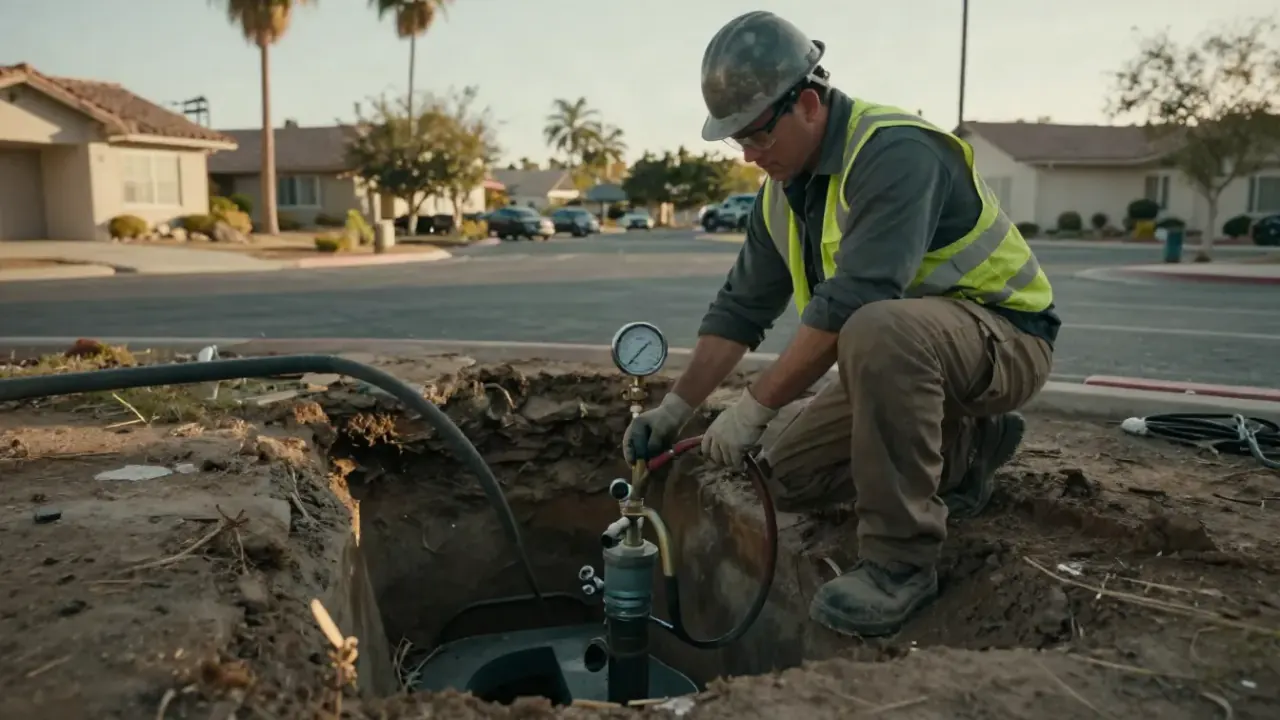
How Tree Roots Damage Sewer Lines
Tree roots crack into Stanton's aging clay sewer laterals through hairline joints, then grow into a mat that blocks the pipe. Here's how it happens and what fixes it.
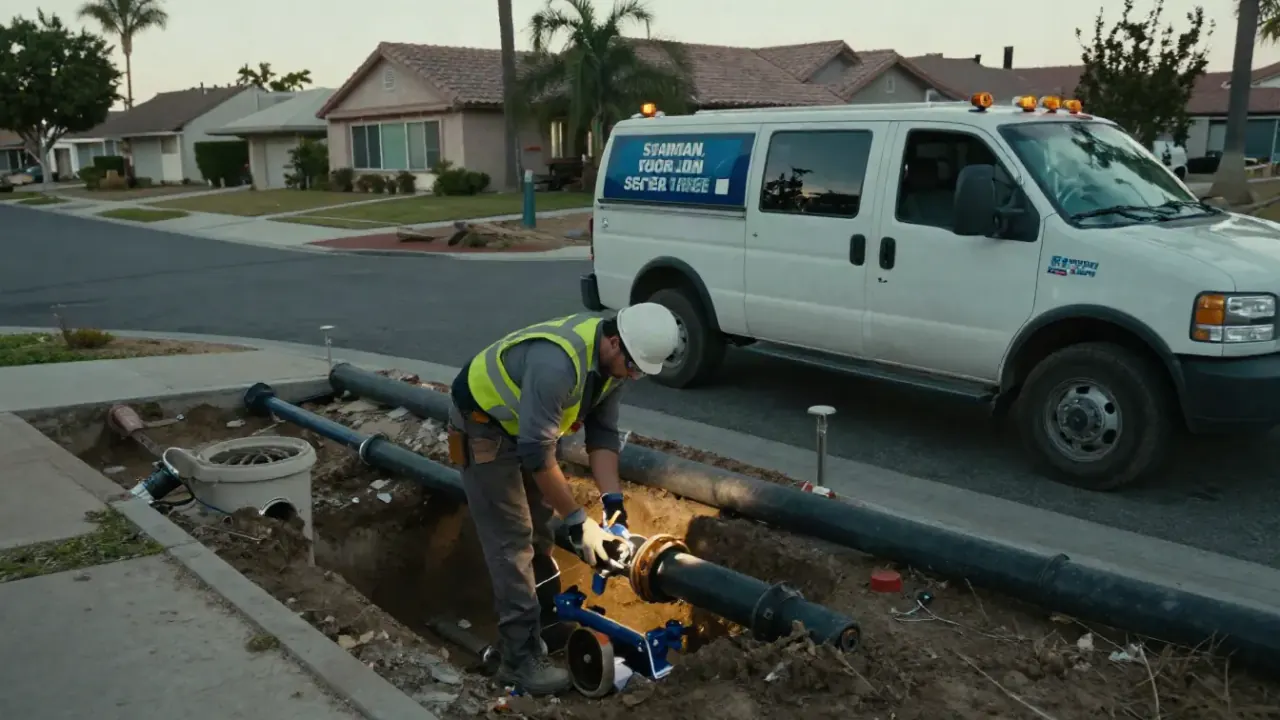
Tree roots damage sewer lines by entering through the hairline gaps at pipe joints and cracks, then expanding inside the pipe until they form a fibrous mat that catches grease, paper, and waste. That mat narrows the line a little more every month until water backs up into your lowest drain. In Stanton, the problem is worse than in most of Orange County because so much of the city's housing stock still drains through original clay tile laterals installed in the 1950s and 1960s.
This post covers how roots actually get in, the warning signs most homeowners miss, what a repair costs in 2026, and how to keep roots out of your line for good.
Why Tree Roots Target Sewer Lines in Stanton
Stanton sewer lines sit in soil that stays warm and moist year-round, which is exactly what roots are hunting for. A sewer lateral carries water vapor and condensation to the surface through every joint, and a root tip can detect that moisture gradient from 20 feet away.
Three local factors make Stanton especially vulnerable:
- Pipe material. Much of the city was built out before ABS plastic became standard. Clay tile laterals are strong in compression but brittle, and the mortar at each joint cracks as the soil shifts.
- Mature street trees. Ficus, liquidambar, and eucalyptus planted along parkways in the 1960s now have root plates 30 to 50 feet wide - often wider than the front yard.
- Shrinking and swelling soil. Stanton's clay-heavy ground expands when irrigated and contracts in dry months, opening joints that were watertight a decade ago.
Roots do not break into a pipe for water. They break in for oxygen and nutrients, and the pipe is simply the easiest path through compacted soil.
How Do Tree Roots Get Into Sewer Lines in Stanton CA?
Roots get into Stanton sewer lines through the joints first, not through the pipe wall. A clay lateral is 3 to 5 feet deep, assembled in 3-foot sections, and every one of those joints is a seam. When soil movement opens a seam by even a sixteenth of an inch, a root hair thinner than a human hair slips through.
Once inside, the root has everything it needs: constant moisture, warm air, and a steady supply of organic matter. It thickens, branches, and sends out thousands of feeder roots that fill the pipe's cross-section like steel wool.
Two other entry points matter just as much:
- Cracks and fractures from ground settling or heavy vehicle traffic over a shallow line.
- Loose or offset connections at the city main, where the lateral meets the public sewer.
If you want to see exactly where roots are entering your line, a sewer camera inspection Stanton CA shows the joint, the root mass, and the pipe condition on video before anyone digs.
What Are the Signs of Tree Roots in Sewer Lines in Stanton?
The signs of tree roots in a sewer line in Stanton usually show up in this order: slow drains, gurgling toilets, then a backup at the lowest fixture in the house. If you catch it at the slow-drain stage, you're looking at a cleaning job. If you wait for the backup, you're often looking at a repair.
Watch for these:
- One drain slows down while the rest of the house is fine - that's the signature of a partial blockage, not a full clog.
- Toilets gurgle or bubble when the washing machine drains.
- Water pools around the floor drain in the garage or laundry room.
- You hear a faint hissing or bubbling under the slab.
- The lawn has a strip of unusually green, fast-growing grass running from the house toward the street.
- Your water bill ticks up with no change in usage.
That green stripe is the one most homeowners ignore. It's the root system feeding on the moisture escaping your lateral, and it's usually the first visible clue from the surface.
The Three Stages of Root Damage
Root intrusion in sewer pipes moves through three predictable stages, and the stage you're in determines the repair.
Stage 1: Intrusion
Root hairs enter through joints and cracks. Flow is reduced by 10 to 25 percent. A drain cleaning clears it, but the root grows back within 6 to 18 months because the entry point is still open.
Stage 2: Blockage
The root mass fills 50 to 80 percent of the pipe and starts catching grease, wipes, and paper. Backups become routine. This is where most Stanton homeowners call us, and it's the stage where a sewer root intrusion repair Stanton CA can still save the pipe.
Stage 3: Structural Failure
Root pressure widens cracks, offsets joints, and can collapse a clay pipe entirely. At this point the pipe has to be replaced, not cleaned. We see this most often in laterals that are 60-plus years old and have been root-cut three or four times.
Can Tree Roots Really Break Sewer Pipes in Stanton California?
Yes - tree roots break sewer pipes in Stanton California, but not by brute force. Roots exert only a few pounds of pressure per square inch. What breaks a pipe is the cycle: a root widens a hairline crack, water freezes or soil shifts, the crack grows, a thicker root enters, and the process repeats until the pipe splits or the joint offsets.
Clay tile is the most vulnerable material, followed by cast iron that has already thinned from the inside. Orangeburg pipe, used in a few pockets of older Stanton construction, can be crushed by a root mass alone.
We see the worst cases in the older residential blocks off Sewer Line Repair in Beach Boulevard Corridor, where 1950s laterals run under mature parkway trees and the pipe depth is only 30 to 36 inches. Shallower pipe means warmer soil, and warmer soil means more aggressive root growth.
What to Watch Out For
Most of the expensive root repairs we do started with a decision the homeowner made months earlier. Here are the mistakes we see most often.
- Treating a slow drain with chemicals. Store-bought root killer and drain cleaner can kill the root tips, but the dead root mass stays in the pipe and catches everything that follows.
- Cutting roots without sealing the entry point. A cable machine clears the pipe, but the joint is still open. The root regrows thicker and faster the second time.
- Planting the wrong tree over the lateral. Ficus, willow, and liquidambar are the three worst choices for a front yard with a shallow sewer line.
- Ignoring a green stripe in the lawn. That's free diagnostic information, and it usually points within 2 feet of the intrusion.
- Waiting for a backup before scoping. A camera inspection costs a fraction of an emergency backup call, and it tells you the pipe's real condition instead of guessing.
One more: don't assume a newer home is safe. We regularly find root intrusion in 1990s builds where a mature tree was planted too close to the lateral by a previous owner.
How to Prevent Tree Roots in Sewer Lines in Stanton
Preventing tree roots in sewer lines in Stanton comes down to three things: knowing where your lateral runs, keeping the wrong plants away from it, and sealing the joints before roots find them.
Start here:
- Locate your lateral. Most Stanton laterals run from the front of the house to the street at a depth of 3 to 5 feet. If you don't know the path, a camera inspection maps it.
- Keep trees 10 feet back. That's the minimum for a medium-canopy tree. For ficus or eucalyptus, 20 feet is safer.
- Choose sewer-safe species. Crape myrtle, citrus, and small palms have non-aggressive root systems that won't chase a lateral.
- Schedule a camera check every 18 to 24 months if you have mature trees over the line. Catching a Stage 1 intrusion is a cleaning job.
- Consider a CIPP liner. A sewer pipe lining Stanton CA creates a seamless epoxy wall inside the old pipe, so there are no joints left for roots to enter.
If the pipe is already cracked or offset, lining may not be enough. In that case we look at trenchless sewer line repair Stanton CA, which replaces the lateral through existing access points and leaves your driveway and lawn intact.
When to Call a Professional
Call a professional the moment you have two or more slow drains, a gurgling toilet, or a backup that returns within a few weeks of being cleared. Those are the signs that a root mass is still in the pipe and the entry point is still open.
At Stanton Sewer Line Repair, we run a camera down the line first, show you the footage, and tell you whether the pipe needs cleaning, spot repair, or full replacement. We work on laterals across Stanton and the surrounding neighborhoods, including the older blocks near Sewer Line Repair in Midway City where the same clay-pipe-and-mature-tree combination shows up block after block.
Frequently Asked Questions
How do tree roots get into sewer lines in Stanton CA?
Roots enter through the joints, cracks, and offset connections in clay or cast-iron laterals. A root hair thinner than a human hair slips through a gap of about a sixteenth of an inch, then thickens inside the pipe where moisture and nutrients are constant.
What are signs of tree roots in sewer lines in Stanton?
The earliest signs are one slow drain, gurgling toilets, and a strip of extra-green grass over the lateral. Backups at the lowest fixture in the house usually mean the root mass has already filled 50 percent or more of the pipe.
Can tree roots really break sewer pipes in Stanton California?
Yes. Roots themselves exert only a few PSI, but repeated growth cycles widen cracks and offset joints until a 60-year-old clay pipe splits or collapses. Once the pipe is structurally failed, cleaning won't fix it - replacement will.
How to prevent tree roots in sewer lines in Stanton?
Keep trees at least 10 feet from the lateral, plant non-aggressive species, and schedule a camera inspection every 18 to 24 months. Sealing joints with a CIPP liner stops roots from entering in the first place.
How much does root intrusion repair cost in Stanton in 2026?
Typical 2026 pricing in this area runs $250 to $600 for a camera inspection and root cutting, $1,200 to $3,500 for spot repair, and $4,000 to $12,000 for a full trenchless replacement, depending on length and depth.
Get Help with Sewer Line Repair in Stanton
If roots have already found your lateral, we can scope it, clear it, and repair it before the next backup hits. Call Stanton Sewer Line Repair at (657) 359-9054 and we'll get a camera in the line this week.