Focused arrival windows
Useful updates and clear arrival timing.
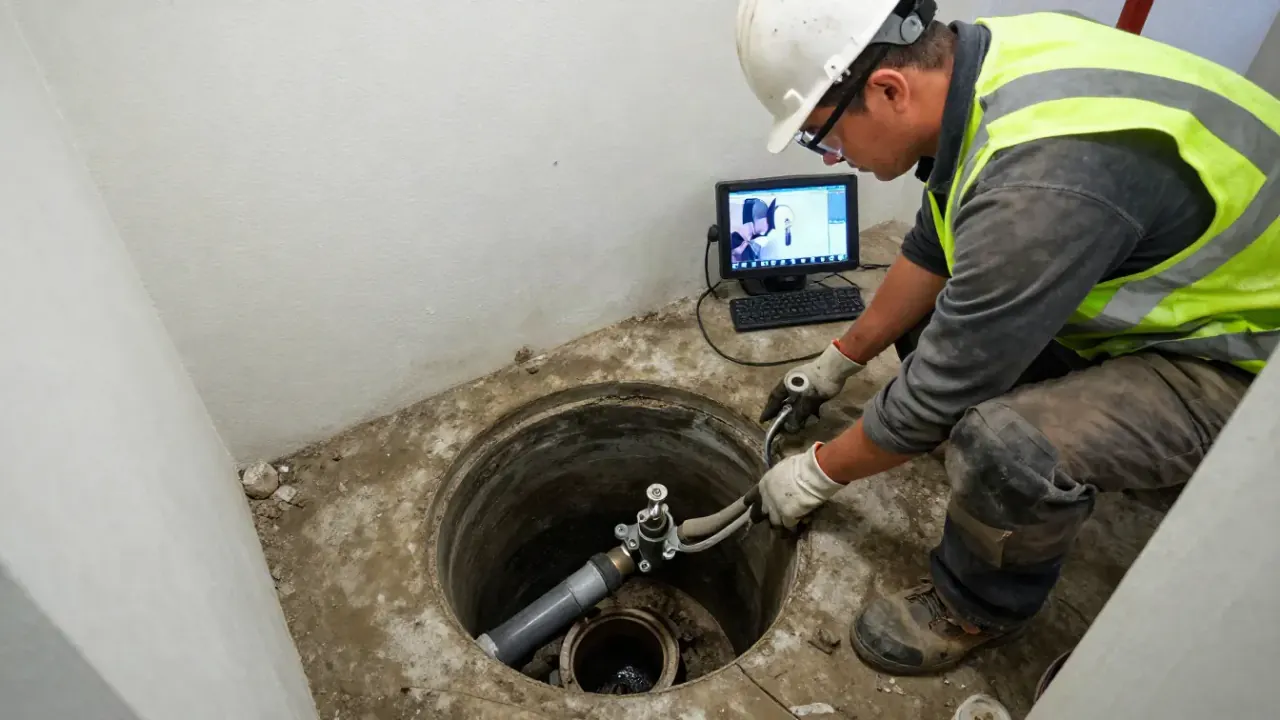
Sewer Line Repair in Katella Avenue Corridor means digging up less and fixing more. We run a sewer camera down your lateral, mark the break with a pipe locator, and tell you straight whether it is a spot patch, a CIPP liner, or a full replacement. Most jobs on the Katella Avenue commercial strip and the older tracts off Knott Avenue are finished in a day. Call (657) 359-9054 and we will get eyes on your line.
Useful updates and clear arrival timing.
Review the approach and price before deciding.
Equipped vehicles and respectful cleanup.
Neighbors serving neighbors with follow-through.
Sewer Line Repair in Katella Avenue Corridor is plumbing work that clears, patches, or replaces the pipe carrying waste from your building to the city main, and it is needed the moment a line backs up, bellies, or cracks. We work this stretch of Katella Avenue every week, from the commercial kitchens near Knott's Berry Farm vicinity down to the older residential blocks toward Stanton Park. The corridor is a busy arterial road with aging sewer mains underneath it, so when a lateral fails, you usually find out at the worst time. Our trucks carry a RIDGID sewer camera, a Spartan Tool root cutter, and a hydro-jetter, so we diagnose on the first visit instead of guessing. Whether you need Sewer Line Repair Katella Avenue Corridor CA homeowners can schedule around a workday, or emergency sewer line repair Katella Avenue Corridor CA calls at 2 a.m., the process starts the same way: camera, locate, then a straight answer on cost and method.
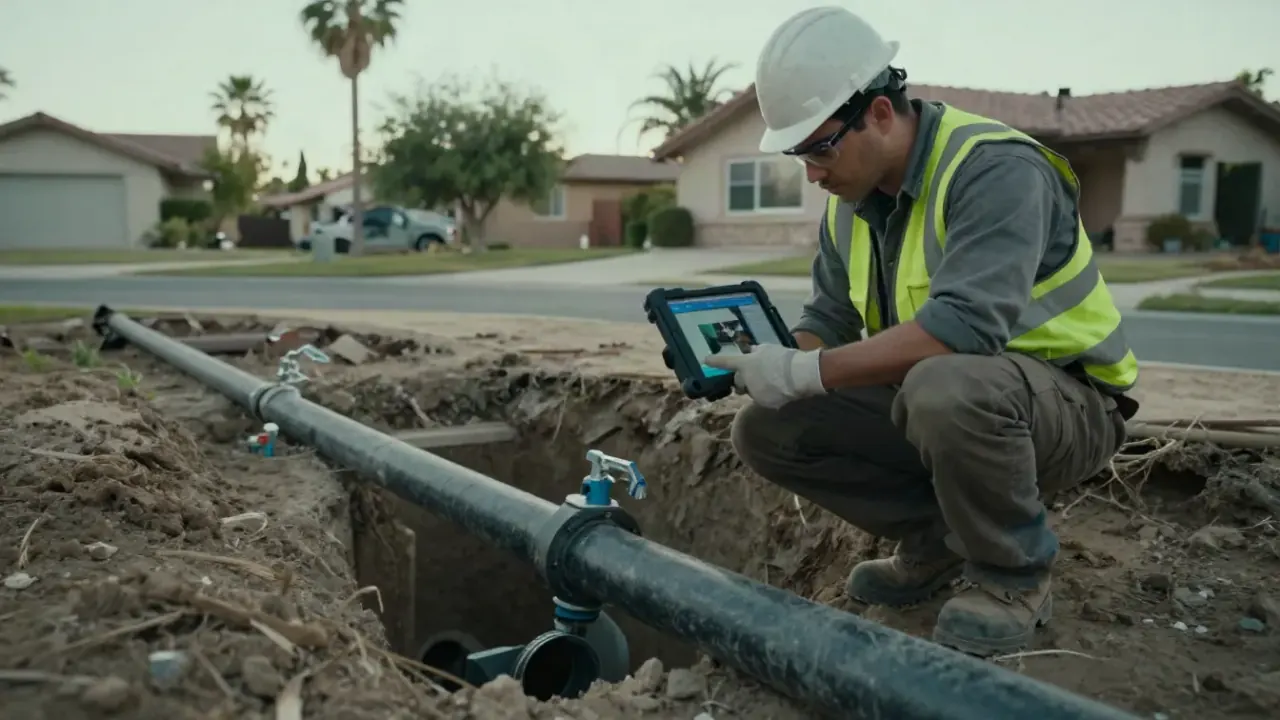
Demand here splits cleanly in two. Commercial properties on the Katella Avenue commercial strip need grease control and fast backup response, while the residential tracts off Knott Avenue need root intrusion repair and pipe replacement on clay laterals. If you have been searching for affordable sewer line repair in Katella Avenue Corridor near me, start with a camera inspection. It costs far less than a replacement and it tells you which of the services below you actually need.
Most Katella Avenue Corridor lots sit close to the street with mature landscaping, so trenchless work saves the driveway and the parkway trees. We dig one access pit, pull the new HDPE pipe through the old line, and restore the surface the same day. It is the standard fix for cracked or root-damaged laterals in the residential blocks off Knott Avenue.
View service →02For lines that are cracked but still round, we invert a CIPP liner through the pipe and cure it in place. No excavation beyond small access points. This is the go-to repair for commercial buildings on the Katella Avenue commercial strip where a torn-up parking lot would cost more than the plumbing. The epoxy resin cures to a smooth bore that resists grease and root tips.
View service →03When a clay lateral is collapsed or badly offset, lining will not hold. We pull a bursting head through the old pipe and drag new HDPE pipe behind it, upsizing in the same bore. On the older tracts near Stanton Park this replaces failing clay without trenching the whole yard. One access pit at each end, and the new line is seamless.
View service →04A single cracked joint or a localized root entry does not always mean a full replacement. We cut out the damaged section, set a new coupling and matching pipe, and backfill. For properties along Katella Ave east and west, this is the least expensive correct fix when the camera shows the rest of the line is still sound. Same-day in most cases.
View service →05Every job here starts with a NASSCO PACP-style camera run. We push a RIDGID camera from the cleanout to the city main, record the footage, and log the defect distances so you can see exactly where the problem is. For home sales in 90680 and 92804, that recording is what a buyer's agent wants in hand before closing. We leave you the file.
View service →06Parkway trees along Katella Avenue Corridor feed roots straight into clay pipe joints. We cut them out with a Spartan Tool root cutter, then camera the line to confirm the pipe is not crushed. If the joint is open, we schedule a CIPP liner or spot repair so the roots do not return next season. Cutting alone is a temporary fix and we say so.
View service →07A backup at a commercial kitchen on the Katella Avenue commercial strip is a health-code problem, not just a plumbing one. We hydro-jet the grease out, camera the line, and repair whatever caused the blockage. For residential calls near the Western Avenue intersection, we pull the cleanout cap, jet the line, and test flow before we leave. Emergency response is available around the clock.
View service →08Orange County buyers increasingly ask for a lateral inspection before closing. We camera the full run from the house to the main, document defects, and give you a written summary with footage. For homes in the older tracts off Knott Avenue, this often surfaces clay pipe issues the seller did not know about. Schedule it before contingencies expire.
View service →09Ground movement and decades of traffic over a busy arterial road leave laterals offset or bellied. Water pools in the low spot and solids collect. We locate the sag with the camera, then either re-grade that section or line through it with CIPP. Properties on Katella Ave west near the Western Avenue intersection see this most often because of the soil and traffic load.
View service →Execution on this corridor is about access and timing. Katella Avenue is a busy arterial road, so we schedule commercial work on the Katella Avenue commercial strip before opening hours or after close, and we pull permits through the City of Stanton when the repair touches the public right-of-way. Residential jobs in the tracts off Knott Avenue usually get a morning slot. Our trucks carry a vacuum excavator for potholing, a pipe locator to mark the main, and a CIPP liner inversion rig for same-day lining. California contractor license C-36 work means we handle the plumbing scope and coordinate the street cut if one is needed. If you are comparing sewer line repair cost Katella Avenue Corridor CA quotes, ask whether the price includes camera footage, permit fees, and surface restoration. Ours does. We also run a NASSCO PACP certified camera operator on every inspection, so the footage is documented to a standard your buyer, insurer, or city inspector can read.
Restaurant laterals here fill faster than residential lines, and a single Friday-night backup can shut a kitchen down. Grease also hides the real defect, so a camera run is mandatory before any repair is quoted. We hydro-jet the line first, then camera it to see what the grease was hiding. If the pipe is sound, we set the property on a maintenance jetting schedule. If it is cracked or offset, we quote the CIPP liner or spot repair the same visit.
Decades-old clay pipe joints open up and let parkway tree roots in. Cutting roots without repairing the joint means the same call again next year, and repeated cutting can crack the pipe further. We cut the roots with a Spartan Tool root cutter, then camera the joint. If it is open, we line that section with CIPP or set a spot repair. The goal is a smooth bore the roots cannot grip.
Soil movement and constant traffic load leave low spots where waste pools. The line drains slowly, then backs up. A camera run shows the belly and tells us how much pipe is affected. We locate the sag, then either re-grade that section or line through it. For longer bellies we use pipe bursting to pull new HDPE at a consistent grade, which solves the problem instead of chasing it.
Sewer lateral repair and replacement in Stanton falls under C-36 plumbing scope. Hiring an unlicensed crew can void your homeowner coverage and complicate a future home sale in 90680 or 92804.
PACP coding gives your inspection footage a consistent defect rating. It matters for home-sale lateral inspections and for any repair that needs city sign-off on the public right-of-way.
Any work inside the public right-of-way along Katella Avenue needs a permit before excavation. We pull it, schedule the inspection, and restore the surface to city spec.
The corridor has a specific set of conditions that drive sewer problems: a busy arterial road overhead, aging clay laterals in the residential tracts, parkway trees, and commercial kitchens pushing grease into lines that were never sized for it. Add north Orange County's dry soil and occasional winter storms, and you get the four problems below. If you want the best Sewer Line Repair in Katella Avenue Corridor, ask which of these the crew sees most.
Parkway trees along Katella Avenue Corridor send roots toward moisture, and old clay pipe joints are the easiest entry point. Once inside, roots grow into a mat that catches paper and grease until the line blocks completely. We cut the roots with a Spartan Tool root cutter, then camera the joint. If it is open, we line that section with CIPP so the bore is smooth and roots have nothing to grip. Cutting alone just resets the clock.
Restaurants on the Katella Avenue commercial strip produce far more grease than a residential line handles. Over time it cools, sticks to the pipe wall, and narrows the bore until a Friday-night rush pushes it shut. We hydro-jet the line to bare pipe, then camera it to find any defect the grease was hiding. If the pipe is sound, we set a maintenance jetting schedule. If it is cracked, we quote the liner or spot repair the same visit.
Decades of traffic over a busy arterial road, plus soil movement in north Orange County, leave laterals sagging or shifted at the joints. Waste pools in the low spot and solids settle out, so the line drains slowly and then backs up. We locate the sag with the camera, then either re-grade that section or line through it. For long bellies, pipe bursting pulls new HDPE at a consistent grade, which fixes the problem instead of chasing it every year.
The older residential tracts on both sides of Knott Avenue still have original clay pipe. After decades in the ground, the pipe cracks, shifts, and in some spots collapses. A collapsed line cannot be jetted clear, and it will not drain. We camera the full run to find every defect, then replace the failed section. Trenchless methods let us pull new HDPE through the old bore with one or two access pits, so the yard and driveway stay intact.
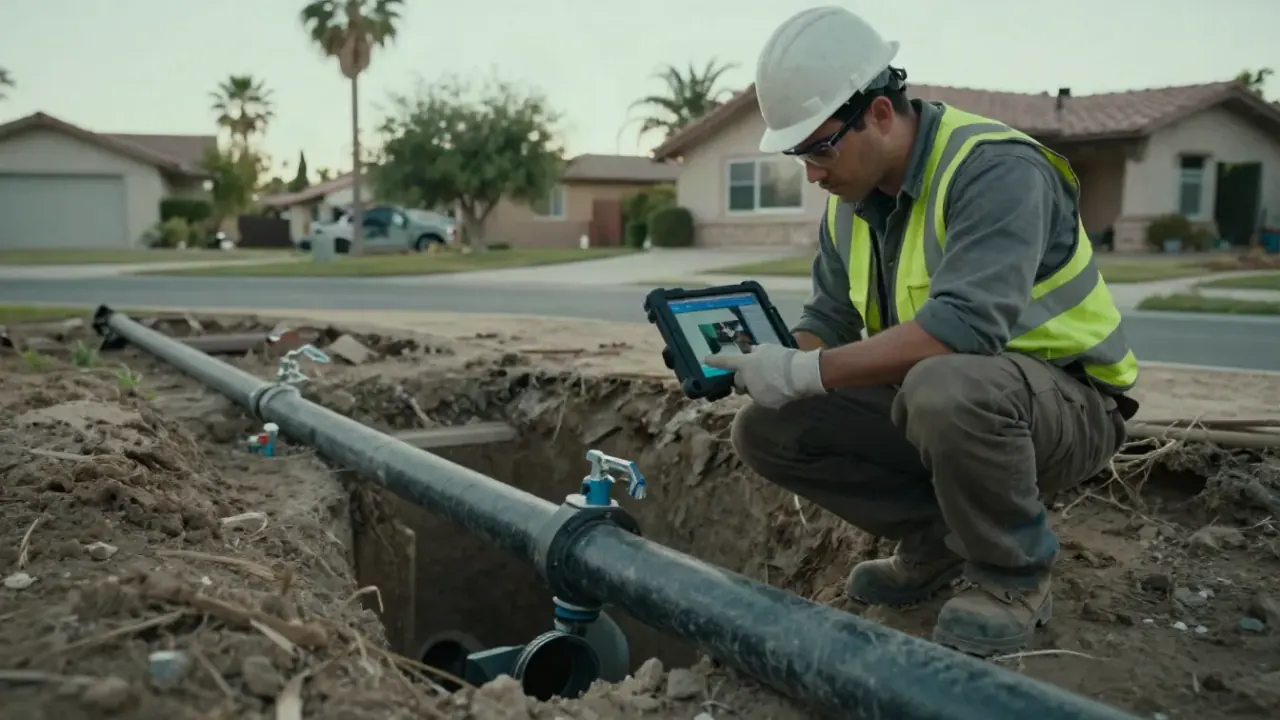
Typical 2026 pricing on this corridor runs $180 to $450 for a camera inspection, $350 to $900 for hydro-jetting and root cutting, and $4,500 to $12,000 for a full trenchless replacement depending on length and depth. Spot repairs usually land between $800 and $2,500. Commercial grease-line work on the Katella Avenue commercial strip prices by line length and access, and we quote it after the camera run. If you are searching for the best Sewer Line Repair in Katella Avenue Corridor, compare what each quote includes: footage, permits, and surface restoration are the three line items that separate a real number from a lowball.
A short lateral on a small lot near the Western Avenue intersection costs far less to replace than a long run on a wider parcel. Depth matters too: deeper lines mean more excavation and shoring, which adds labor and time to every trenchless job.
Spot repair is the cheapest correct fix when the camera shows one bad joint. CIPP lining costs more but avoids excavation. Pipe bursting sits at the top because it replaces the full run with new HDPE pipe, though it often costs less than open-cut once you add driveway and landscape restoration.
Commercial work under a parking apron on the Katella strip costs more to restore than a residential yard. Concrete, asphalt, and landscaping each carry a different restoration price, and we include that line in the quote instead of surprising you after the dig.
Katella Avenue is a long, busy arterial road, so we route by landmark rather than address. Stanton City Hall, Stanton Park, and the Knott's Berry Farm vicinity are the three anchors we use to place a call, and the Katella Avenue commercial strip tells us whether we are heading to a restaurant line or a residential lateral. If you can tell us the nearest cross street, we can usually be moving within minutes.
A central orientation point on the corridor. Calls near City Hall are usually within a few blocks of the civic center, which helps us pick the right cross street and avoid the worst of the arterial traffic.
Useful for placing residential calls on the surrounding streets. The park sits among older tracts with mature trees, so it also tells us to expect clay laterals and root intrusion before we arrive.
The eastern anchor of the corridor. Traffic patterns around the park change by hour, so we plan commercial and residential arrivals here outside peak visitor times whenever the job allows.
The main business frontage along the corridor. Knowing a call is on the strip tells us to bring the hydro-jetter and grease-handling equipment, since commercial kitchen laterals are the common cause of backups here.
A continuous run of restaurants, retail, and service businesses along the arterial. Many units share older laterals, and kitchen grease is the dominant load on the line. Most of our commercial jetting and CIPP lining work happens here.
A smaller cluster of businesses around the Western Avenue intersection, with a mix of food service and retail. The laterals here tie into mains that see heavy traffic load, so bellied and offset pipe is common.
A main cross intersection on the corridor. It gives us a clean entry point to both the commercial frontage and the residential streets behind it.
The western cross point we use most for commercial calls. Access to the retail cluster and nearby residential blocks is direct from here.
We cover both sides of the corridor, from the commercial frontage to the residential streets behind it. Response times below are typical for scheduled work; emergency calls run faster when traffic on Katella Avenue allows.
The eastern stretch runs toward the Knott's Berry Farm vicinity and mixes commercial frontage with smaller residential parcels. Laterals here are shorter, but many tie into older mains that have been repaired more than once, so camera inspection is the first step on nearly every call. We are on this stretch most weekdays; typical arrival is 30 to 45 minutes from dispatch.
West of the corridor, the lots get wider and the landscaping older. Parkway trees are the main culprit for root intrusion, and several blocks still have original clay laterals. This is where we run the most root cutting and CIPP lining work. Close to our regular route; scheduled jobs usually get a same-day or next-morning slot.
The residential tracts off Knott Avenue are older, with clay pipe laterals and mature trees. Home-sale lateral inspections are common here because buyers want the footage before closing. Offsets and bellies show up in the blocks closest to the arterial. Ten to fifteen minutes from the corridor; emergency calls typically arrive within 45 minutes.
Around the Western Avenue intersection, traffic load and soil movement leave more bellied and offset pipe than anywhere else on the corridor. Commercial kitchens nearby also push grease into shared laterals, so backup calls are frequent. Short run down Katella; we can usually be on site within 30 minutes for backups.
These are the kinds of calls we run on this corridor every week. Details are drawn from real job types; names and exact addresses are withheld.
A restaurant on the Katella Avenue commercial strip had repeat Friday-night backups. Grease was the obvious suspect, but the line backed up again two weeks after jetting. We hydro-jetted the line, then ran a RIDGID camera and found a cracked clay joint under the parking apron collecting grease and root tips. We lined that section with a CIPP liner through two small access pits, avoiding a full lot dig. The line has run clean through two subsequent grease cycles, and the owner moved to a quarterly jetting schedule. No backups since the liner cured.
A homeowner near Stanton Park had slow drains and a sewer smell in the yard. The house still had its original clay lateral, and parkway tree roots had entered at multiple joints. We cut the roots with a Spartan Tool root cutter, camera-inspected the full run, and found three open joints plus a slight belly. We pulled new HDPE pipe through the old bore using pipe bursting, upsizing from 4-inch clay to 4-inch HDPE in the same path. Full flow restored, no excavation beyond two access pits, and the yard was back in shape the same day. The new line carries a 10-year written warranty.
A home sale in the 90680 ZIP was stalled because the buyer's inspector flagged the lateral. The seller had no documentation and did not know the pipe condition. We ran a NASSCO PACP-style camera inspection from the cleanout to the city main, logged the defect distances, and provided the recorded footage with a written summary. Two offset joints were noted but not failing, so we recommended monitoring rather than replacement. The buyer accepted the documented condition, and the sale closed on schedule. The seller avoided an unnecessary replacement quote.
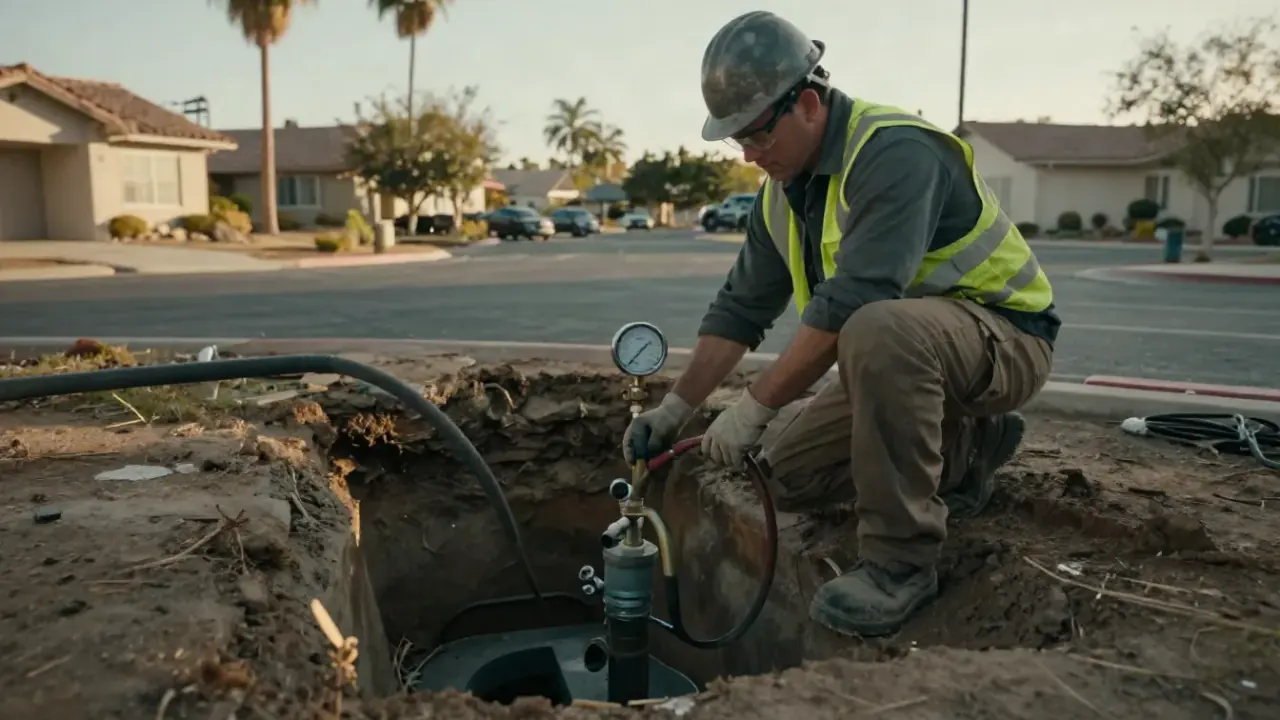
Our kitchen line backed up on a Friday night and we were looking at a lost weekend. The crew jetted the line, camera-inspected it, and found a cracked joint under the apron. They lined it the next week with almost no digging. Straight answers on price before they started, and they showed me the camera footage.
We had roots in the lateral twice in two years and the second plumber just cut them again. This team cut the roots, then showed me the open joints on camera and lined the section. No backups since. They also cleaned up the yard better than they found it.
Called for a home-sale lateral inspection in 90680. They ran the camera the full length, gave me the footage and a written summary the same day, and told me two offset joints were worth watching but not replacing. Saved the deal and saved me from a quote I did not need.
Southern California does not freeze the ground, but the seasons still change what we see on this corridor. Fall and winter bring root activity and storm-driven backups; spring and summer bring grease and heavy commercial use. If you are weighing same-day sewer line replacement in Katella Avenue Corridor, the season affects scheduling more than the work itself.
Roots wake up and start growing toward pipe joints, so root intrusion calls climb through spring. Commercial kitchens also ramp up as patio season starts on the Katella Avenue commercial strip, adding grease load to shared laterals.
Dry soil shrinks and shifts, which is when offset and bellied pipe show up as slow drains. Commercial grease lines see their heaviest load, and backups on the strip tend to happen during peak dinner service.
The first rains push debris and roots into laterals, and older clay pipe is most likely to leak or shift as the soil re-wets. This is also when home sales pick up, driving lateral inspection requests in 90680 and 92804.
Storm runoff saturates the soil, and a cracked lateral that was leaking slowly can turn into a visible sinkhole or a full backup. Emergency calls spike during heavy rain, especially on the residential streets off Knott Avenue.
The corridor sits in the middle of north Orange County, so we run crews across the surrounding cities on the same schedule. If you are just outside the Katella Avenue Corridor, we likely cover your street already.
A short run west along the corridor. Many Midway City customers find us through commercial referrals from the Katella strip.
Local coverage and details
Just south of us, with a similar mix of commercial frontage and older residential tracts. We cover both corridors on the same route.
Local coverage and detailsRuns north-south through our service area and crosses Katella Avenue. Calls here are often scheduled alongside Katella jobs.
Local coverage and details
A nearby residential area with older laterals. Home-sale lateral inspections are a common request from this neighborhood.
Local coverage and detailsMost bad sewer jobs on this corridor trace back to one thing: nobody ran a camera before quoting. A crew that guesses will either oversell a replacement or patch a line that needed more. Here are the five questions worth asking before you sign anything.
A camera run is the only way to know whether you need a spot repair, a liner, or a full replacement. A quote without footage is a guess, and guesses on this corridor tend to be expensive in one direction or the other.
Sewer lateral work falls under California contractor license C-36 plumbing scope. An unlicensed crew can void your homeowner coverage and create problems when you sell, especially in 90680 and 92804 where buyers inspect laterals.
Work inside the public right-of-way along Katella Avenue needs a city permit, and the surface has to be restored to spec. If those line items are missing, the final bill will be higher than the quote.
Trenchless lining, pipe bursting, and spot repair solve different problems. A crew that explains why one fits your line, and shows you the camera footage behind the call, is reading the pipe instead of selling a package.
A written warranty tells you the crew stands behind the repair. Ask what it covers, how long it runs, and whether it transfers if you sell the property. Get it in the paperwork, not just in conversation.
NASSCO
OSHA
OSHA
IAPMO
$2M general liability plus workers compensation
member
member
Most jobs here run $800 to $2,500 for a spot repair, $4,500 to $12,000 for a full trenchless replacement, and $180 to $450 for the camera inspection that tells you which one you need. Commercial grease-line work on the Katella Avenue commercial strip prices by length and access. We quote after the camera run, so the number matches your actual pipe.
The right crew is the one that cameras the line first, explains the footage, and quotes permits and restoration in writing. We work this corridor weekly, carry a RIDGID camera and Spartan Tool root cutter on every truck, and run NASSCO PACP-style inspections. Compare quotes on what they include, not just the total.
Yes. We answer emergency calls around the clock, including weekends and holidays, and dispatch the nearest crew. Typical arrival on the corridor is 30 to 45 minutes when traffic allows. If sewage is backing into your building, shut off water use and call (657) 359-9054 right away.
You need replacement when the camera shows collapsed pipe, multiple failed joints, or a long belly that lining cannot bridge. Repeat backups after jetting, a soggy yard patch, and sewage odor near parkway trees are the usual warning signs. A camera inspection settles it in under an hour.
Same-day replacement is possible for straightforward runs, and most trenchless jobs on this corridor finish in one day. We camera the line, confirm the method, and pull the right pipe and fittings before we start. Longer runs or deeper lines may need a second day, and we tell you that before we dig.
Not seeing your question? Our local team can help you understand urgency, scheduling and what to expect.
Ask the local team
Reach us at (657) 359-9054 for sewer camera inspections, spot repairs, and trenchless replacement across Stanton, California. We answer emergency backup calls 24/7 and book standard inspections Monday through Friday. Tell us your cross streets and what the drains are doing, and we will get a tech out with the camera.