Focused arrival windows
Useful updates and clear arrival timing.
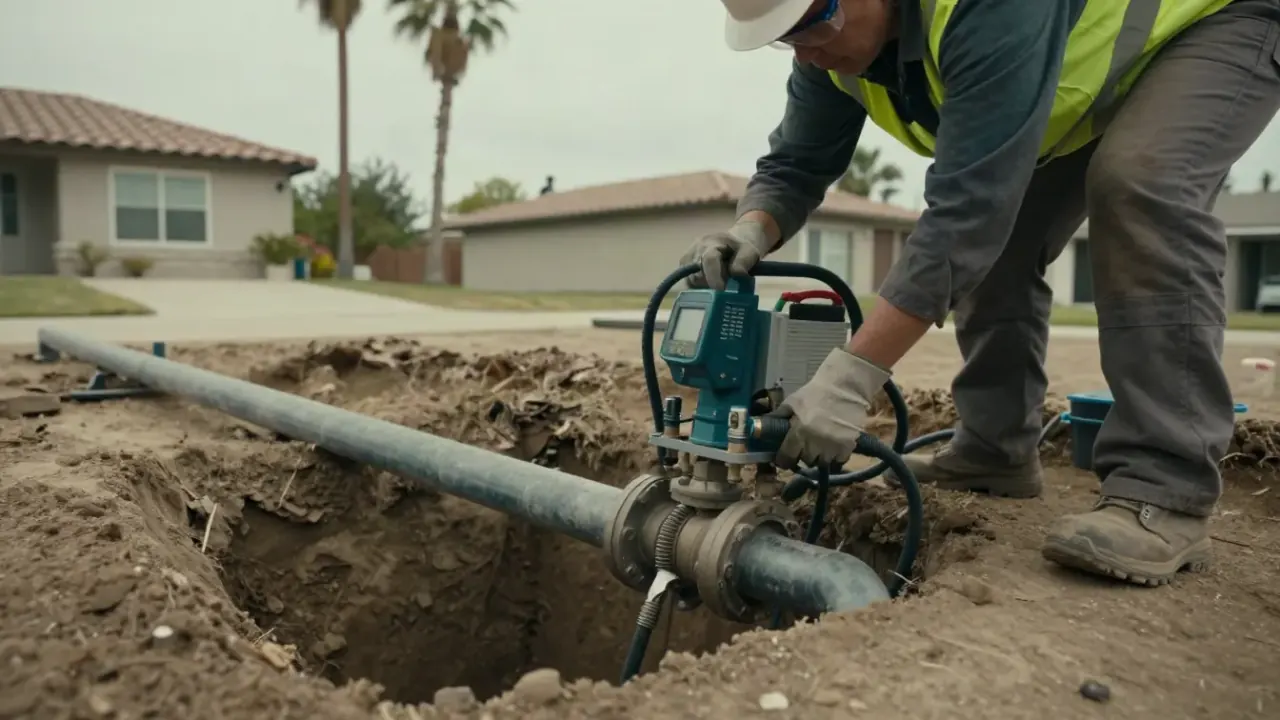
Trenchless Sewer Line Repair in Stanton means we fix the broken lateral under your lawn, driveway, or patio by pulling a new line through the old one instead of trenching the whole yard. If roots, a bellied pipe, or a collapsed sewer line is causing backups, we run a sewer camera, locate the damage, and give you a straight price before we start. One visit, one crew, no torn-up landscaping.
Useful updates and clear arrival timing.
Review the approach and price before deciding.
Equipped vehicles and respectful cleanup.
Neighbors serving neighbors with follow-through.
Every trenchless job we quote covers the diagnosis, the prep, the installation, and the final proof. Here is what is in the price, so you know exactly what you are paying for before we start.
Full push-camera run of the lateral with a pipe locator to mark depth and defect location on the surface. You get the video file, which is useful for warranty claims, home sales, and future reference.
We jet the line at pressure to strip grease, scale, and debris, and run a root cutter through any intrusion. A clean host pipe is what lets a CIPP liner bond properly and what keeps a bursting head moving.
The core of the job. We install a resin-saturated CIPP liner cured in place, or pull new HDPE pipe behind a bursting head. Both produce a joint-free line rated for 50 years or more.
We cut the minimum number of access pits needed, usually one at the cleanout and one at the city connection. A vacuum excavator handles the spoil, and we backfill and compact the pits before we leave.
Before we pack up, we run the camera one more time and walk you through the finished pipe on the monitor. You get a copy of the footage. If anything looks off, we fix it before we call the job done.
Share what is happening and receive a clear next step from the local team.
Trenchless Sewer Line Repair in Stanton is a method of rehabilitating the underground pipe that carries waste from your house to the city main without excavating the entire run. We start with a sewer camera inspection to find the exact failure, then use a pipe bursting machine or a CIPP liner inversion rig to either pull new HDPE pipe through the old line or cure a resin liner against the inside wall. You keep your concrete, your grass, and your mature trees.
Most Stanton homes were built between the 1950s and 1970s, and the original clay or cast iron laterals have hit the end of their service life. Root intrusion at the joints, offset pipe from soil movement, and grease blockage from decades of kitchen use are the three calls we run most. If you are near Midway City or off Beach Boulevard, we can usually get a camera in the line the same day and tell you whether a spot repair or a full trenchless sewer replacement Stanton California job is the right call.
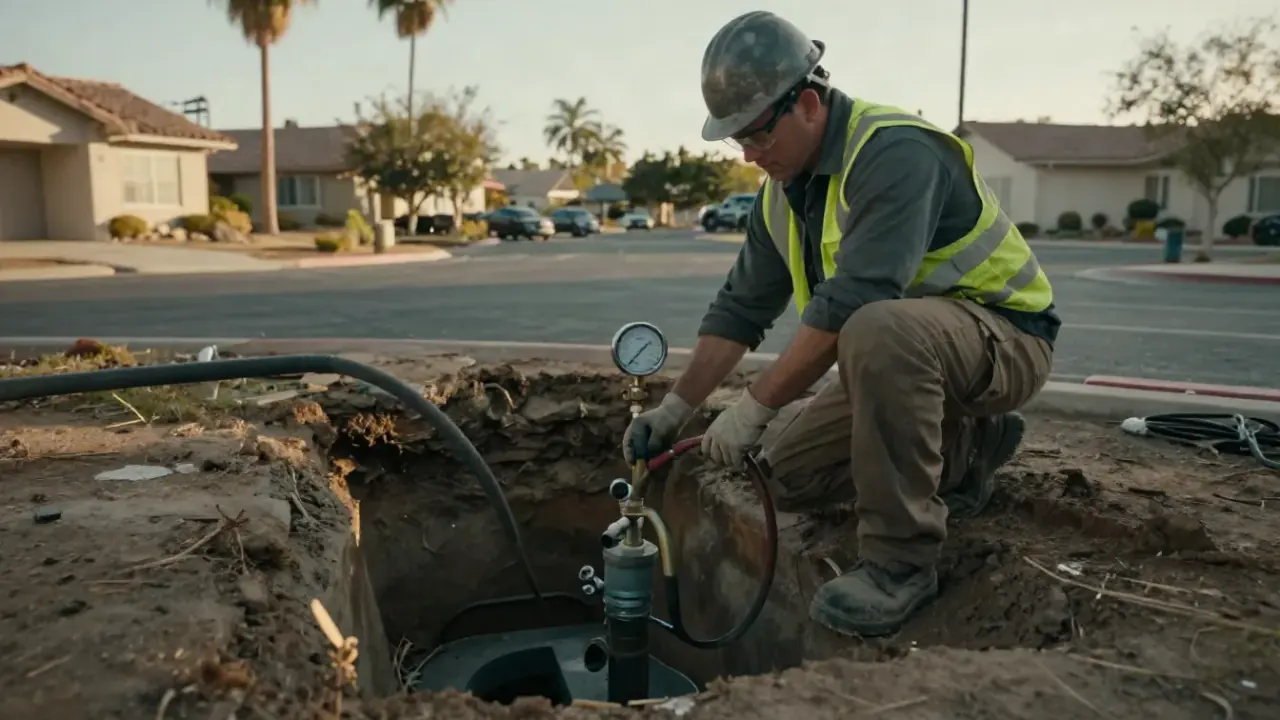
We push a RIDGID sewer camera down the cleanout and record the full run. You watch the monitor with us. You will see the root mass, the crack, the belly, or the offset pipe yourself, and we mark the depth and location on the surface with a pipe locator. This step takes 30 to 45 minutes.
We tell you whether you need a spot repair, a CIPP liner, or a full pipe bursting job, and we give you one flat price for the work. No hourly surprises. If a spot repair solves it, we say so, even when a full replacement would bill higher.
Before any liner goes in, we hydro-jet the line and run a root cutter to strip roots and grease back to bare pipe. A vacuum excavator clears the access pits. Prep is the difference between a liner that bonds and one that fails in two years.
For CIPP, we pull the resin-saturated liner through, inflate it against the host pipe, and cure it. For pipe bursting, we pull an HDPE pipe behind a bursting head that fractures the old clay outward. Most residential runs take four to eight hours on install day.
We run the camera one more time and show you the finished wall or the new pipe, joint-free from end to end. You get the video file for your records. If you are selling the house, that footage satisfies most buyer inspection requests.
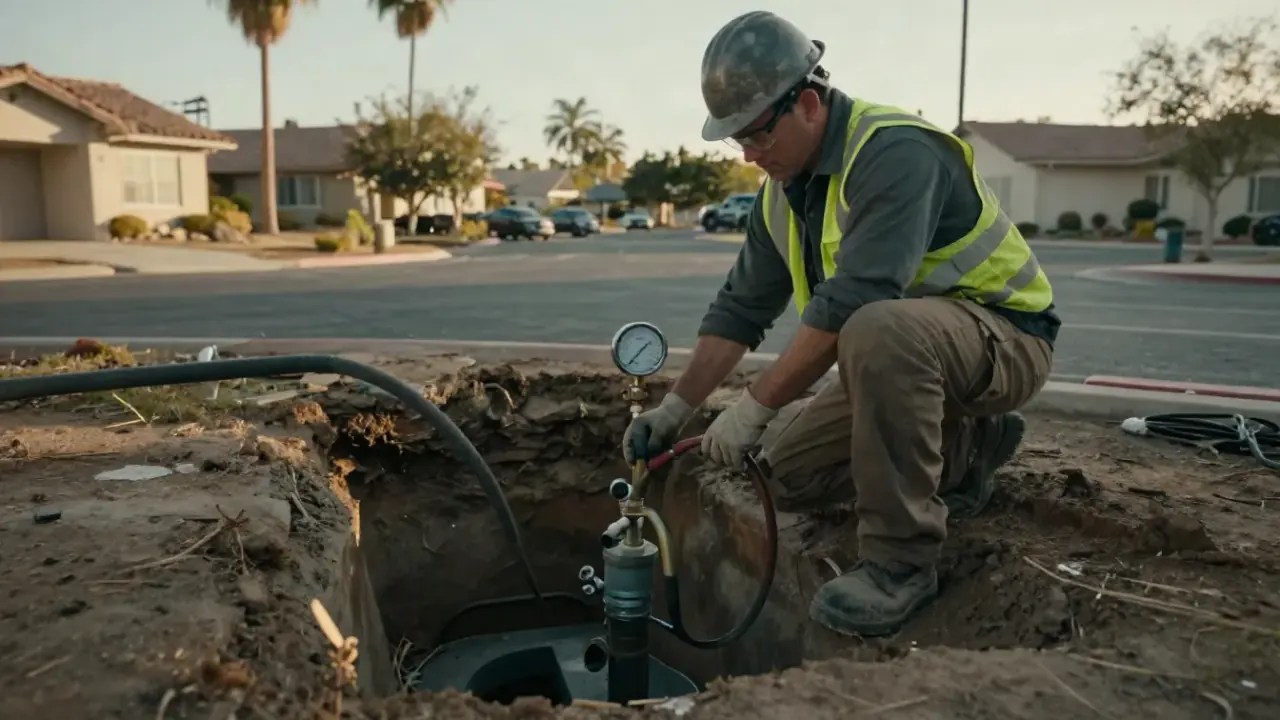
Push-camera inspection of the lateral to locate cracks, roots, offsets, and bellies. Records footage you keep for your records or a home sale.
Marks the depth and surface location of defects and the city connection so we cut access pits in the right spot instead of guessing.
High-pressure water jetting to strip grease, scale, and debris from the pipe wall before lining or bursting. Essential prep step.
Cuts root masses out of the line at the joints. We run it before jetting so the roots come out in pieces instead of wrapping the cutter head.
Inverts and inflates the resin-saturated liner against the host pipe, then cures it in place. Produces a seamless, joint-free interior wall.
Pulls new HDPE pipe through behind a bursting head that fractures the old clay or cast iron outward. Used when the line is collapsed or too deteriorated to line.
Clears spoil from access pits without hand digging near gas, water, or electrical lines. Faster and safer than a shovel crew.
We grade the pipe using the NASSCO PACP standard, which gives a consistent numeric rating for cracks, roots, and deformation. That rating is what tells us whether a liner will hold or whether the line needs bursting.
A felt tube saturated with epoxy resin is pulled through the cleaned host pipe, inflated against the wall, and cured. The result is a smooth, joint-free liner with a 50-year design life. Best for cracked, root-damaged, or corroded pipe that still holds its shape.
A bursting head is pulled through the old pipe, fracturing it outward while new HDPE pipe is pulled in behind. The replacement is seamless and slightly larger than the original. Used for collapsed, heavily offset, or severely deteriorated laterals.
For isolated damage, we cut out the bad section and couple in new PVC pipe using Fernco or Inserta Tee fittings. Fastest and least expensive option when the rest of the run is still sound.
Repeat blockages mean the pipe itself is failing, not just clogged. We camera the line, identify the root intrusion, offset, or belly, and quote a permanent fix. Lining or bursting ends the cycle instead of treating the symptom. No more annual jetting bills and no more backups. One repair, then normal use.
We run a camera inspection, document the defects with footage, and provide a written report. If repair is needed, we quote it the same day so the sale can move forward without a renegotiation stall. A clean report or a fixed line, either way with documentation the buyer and lender accept.
Open excavation would kill the tree and tear up the root system. We cut the roots out, then line the pipe or burst a new one through, working from two small access pits on either side of the tree. The tree stays, the yard stays, and the line is root-proof for decades.
Breaking out concrete is the most expensive part of an open-cut job. Trenchless work goes under the slab without touching it. We cut access pits at the ends and pull the liner or new pipe through. No concrete demolition, no repouring, no cracked driveway. The slab is never disturbed.
Stanton sits on flat ground with a shallow water table in places, and most of the housing stock went up between the 1950s and 1970s. That means a lot of original clay laterals still in service, and clay fails at the joints. We see root intrusion from parkway trees, offset pipe after wet winters, and grease blockage in cast iron kitchen lines. The city requires a permit for sewer lateral work and an inspection before backfill, so we pull the permit and schedule the inspection as part of the job. If you are searching for affordable trenchless sewer line repair Stanton California, the honest answer is that lining is usually cheaper than bursting, and we will tell you which one your pipe actually needs. For homes near the Western Avenue Corridor and Parque Pacifico, access is usually easy and we can finish a liner in a single day.
Mid-century tract homes with original clay laterals running under mature landscaping. Root intrusion at the joints is the most common call here.
Newer construction with ABS laterals, but soil settling has produced offset joints on several streets. Camera inspection confirms it quickly.
Older commercial and residential mix with cast iron laterals that have corroded and scaled. CIPP lining restores them without excavation.
Tight lots with driveways over the sewer run. Trenchless work is the only practical option without tearing out concrete.
Access pits can fill with groundwater, so we dewater and use a vacuum excavator to keep the trench dry during liner installation. It adds time but not cost to the quote.
Sewer lines rely on slope to drain, and flat ground means small bellies trap waste. We check grade with the camera and correct sagging sections during the repair.
Root intrusion is the number one cause of backups we see. Lining or bursting removes the joint gaps roots exploit, so the problem does not return.
Sewer lateral work needs a permit and a pre-backfill inspection. We handle both, which keeps the job compliant and avoids problems at resale.
A 1958 clay lateral with root masses at four joints. The kitchen and laundry drains backed up weekly, and two prior jetting jobs only cleared it for a few months. Camera showed 60 percent flow restriction at the worst joint.
We cut the roots, jetted the line, and installed a 38-foot CIPP liner in one day. Final camera showed a smooth, joint-free wall. Flow rate restored to full, and no backups in the 14 months since.
Maintenance: No root killer needed with a seamless liner. We recommend a camera check every five years, or any time you notice slow drains.
A collapsed clay section 18 feet under a concrete driveway. Two other contractors quoted full excavation and driveway replacement. The homeowner did not want to lose the slab or the mature olive tree beside it.
We pulled new 4-inch HDPE through with pipe bursting from two small access pits. Three days total, driveway untouched, tree intact. The new pipe is seamless and slightly larger than the original.
Maintenance: HDPE needs no root treatment. Keep grease out of the kitchen drain and the line should outlast the house.
Cast iron lateral with heavy scale and corrosion, draining slowly for years. Camera showed rough interior walls catching paper and grease. A full replacement would have meant tearing out a patio.
We hydro-jetted back to bare metal and lined the run with CIPP. The interior is now smooth and non-corrosive. Drains flow like new, and the patio was never touched.
Maintenance: Avoid pouring grease down the drain. An annual hot-water flush keeps the lined pipe clean.
Most of the calls we run in Stanton come down to five failures. A camera inspection tells us which one you have, and the fix follows from there.
Roots grow into the joint gaps, catch paper and grease, and slowly choke the line until sewage backs up into the lowest drain in the house, usually a shower or floor drain. We cut the roots out with a root cutter, jet the line clean, and then line the pipe or replace the affected section. A joint-free CIPP liner or HDPE pipe gives roots nothing to grab onto, so the problem does not come back.
A low spot in the line holds water and solids, so the pipe never fully drains. You get repeated slow drains and standing sewage that eventually turns into a full blockage. We locate the belly with the camera, then either line through it if the sag is minor or cut out and replace the sagging section. For long bellies, a short pipe bursting run realigns the grade.
Sections shift out of alignment and create a lip that catches waste. The line backs up repeatedly even after jetting, and the offset worsens with each wet season. We camera the offset, measure the displacement, and repair it with a spot fix or a liner depending on how many joints are affected. Stanton's older clay laterals are prone to this after heavy rain.
A collapsed section blocks the camera and stops flow entirely. Sewage backs into the house and the line cannot be jetted clear because there is no opening left. This is a pipe bursting job. We pull new HDPE through the failed section behind a bursting head, which fractures the old pipe outward and leaves a seamless replacement in the same trench path.
Cast iron laterals corrode and rough up on the inside, giving grease and scale a surface to cling to. The line narrows over years until it blocks completely. We hydro-jet the line back to bare metal, then line it with CIPP so the interior stays smooth. A lined cast iron lateral drains like new and does not need replacement.
$450 - $14,000 depending on scope and method
Pricing depends on the length of the run, the depth, the access, and which method your pipe needs. For 2026, most Stanton homeowners pay between $4,500 and $12,000 for a full trenchless replacement, with spot repairs at $450 to $1,800. A CIPP liner on a standard 40-foot lateral typically runs $6,000 to $9,000. Pipe bursting runs higher because it includes new HDPE pipe and more pit work. We give you one flat price after the camera inspection, and it does not change unless we find something the camera could not show.
A trenchless repair costs more than a jetting service call, but it ends the cycle of repeat blockages and protects your driveway, patio, and trees. Compared to open-cut excavation plus concrete replacement, most Stanton homeowners save $3,000 to $8,000 and keep their landscaping.
Most Stanton laterals run 30 to 60 feet from the house to the city main. Longer runs need more liner or pipe and more prep time, which raises the price proportionally.
Deeper lines mean deeper access pits and more shoring. A line 8 feet down takes longer to expose than one at 3 feet, and that labor shows up in the quote.
Concrete, pavers, or a mature tree over the run add pit work. Trenchless still avoids full excavation, but the access points cost more when we have to cut through a slab.
CIPP lining is less expensive because it reuses the host pipe. Pipe bursting costs more because it includes new HDPE pipe and a larger bursting head, but it handles collapsed lines that lining cannot.
The city requires a permit and a pre-backfill inspection for lateral work. We include the permit and inspection scheduling in the quote so there are no surprise fees later.
After-hours emergency dispatch carries a higher rate than a scheduled job. If the line is actively backing up, we jet it to restore flow first, then schedule the permanent repair at the standard rate.
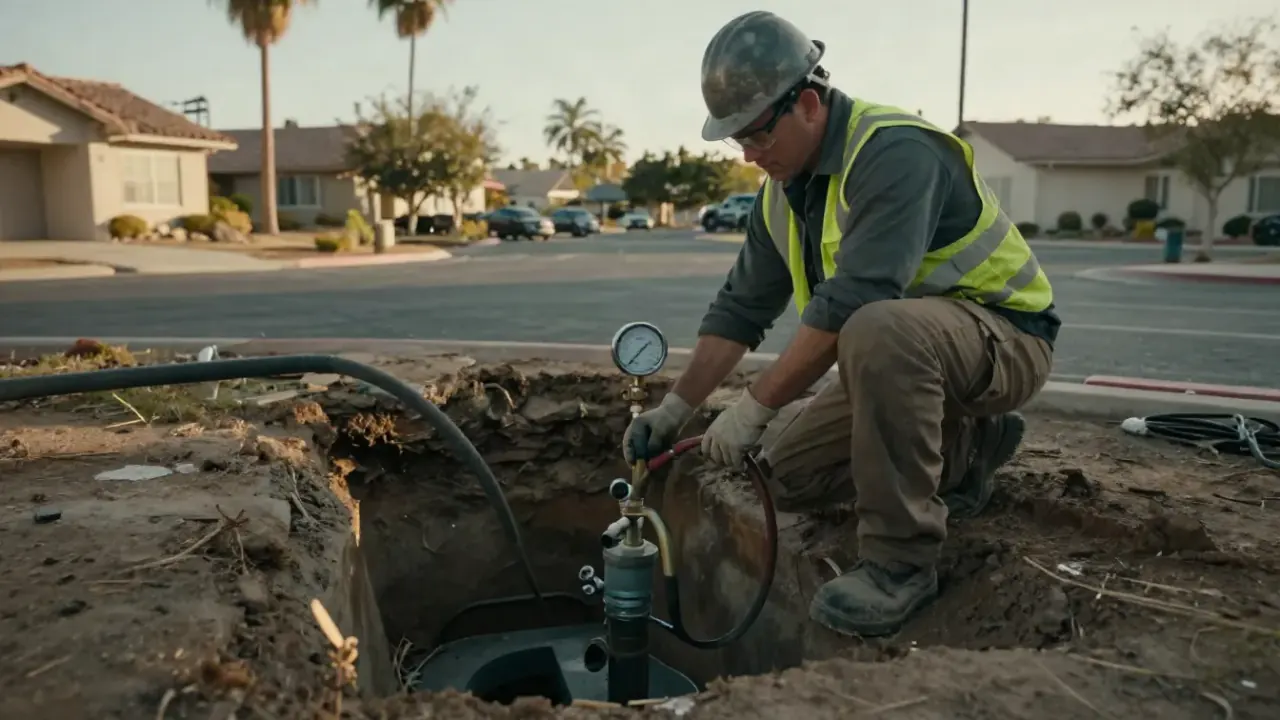
Our technicians hold NASSCO PACP certification for pipeline assessment and work under a California contractor license C-36. Confined space certification and OSHA safety certification are required for every crew member who enters a pit. We have run trenchless sewer line repair in Stanton, CA on clay, cast iron, Orangeburg, and failing ABS laterals, and we carry the tooling to handle each one. When a line is too far gone for lining, we say so and move to pipe bursting rather than sell you a liner that will not hold.
Our kitchen drain backed up twice in one month. They ran a camera and showed me a root mass at a joint about 22 feet out. Instead of digging up my patio, they lined the whole run. Two days of work, and the camera footage at the end showed a clean pipe. That was last spring and we have not had a backup since.
The line under our driveway was collapsed and two other companies quoted full excavation. Stanton Sewer Line Repair pulled new HDPE through with pipe bursting instead. They cut two small pits, left the driveway alone, and finished in three days. Price came in under the dig quotes and the yard is untouched.
We were selling the house and the buyer's inspector flagged the lateral. They came out the next morning, camera'd the line, and gave us a written report with video. There was one offset section, they did a spot repair, and we closed on time. Straight answers, no upselling.
Most residential jobs in Stanton run $4,500 to $12,000 in 2026, with spot repairs at $450 to $1,800. A 40-foot CIPP liner typically lands around $6,000 to $9,000, and pipe bursting runs $8,000 to $14,000 depending on depth and access. Driveway removal, deep runs, and city permitting push the number up; easy access and a straight run pull it down.
No-dig sewer line repair in Stanton means fixing or replacing the lateral without open trenching across your property. We use two methods: CIPP lining, where a resin-saturated felt tube is cured inside the existing pipe, and pipe bursting, where an HDPE pipe is pulled through behind a bursting head that fractures the old clay outward. Both leave your concrete and landscaping untouched.
For most Stanton homes, yes. Trenchless avoids tearing out driveways and mature trees, finishes in one to three days instead of a week, and produces a joint-free pipe that roots cannot enter. The exception is a severely collapsed line with no remaining diameter for a liner or bursting head, which needs open excavation. We tell you which one you have after the camera inspection.
A spot repair takes two to four hours. A full CIPP lining job runs one to two days, and pipe bursting takes two to three days including the access pits. The camera inspection and cleaning happen on day one, installation on day two, and final camera proof the same afternoon. You can use water normally the next morning.
Not seeing your question? Our local team can help you understand urgency, scheduling and what to expect.
Ask the local team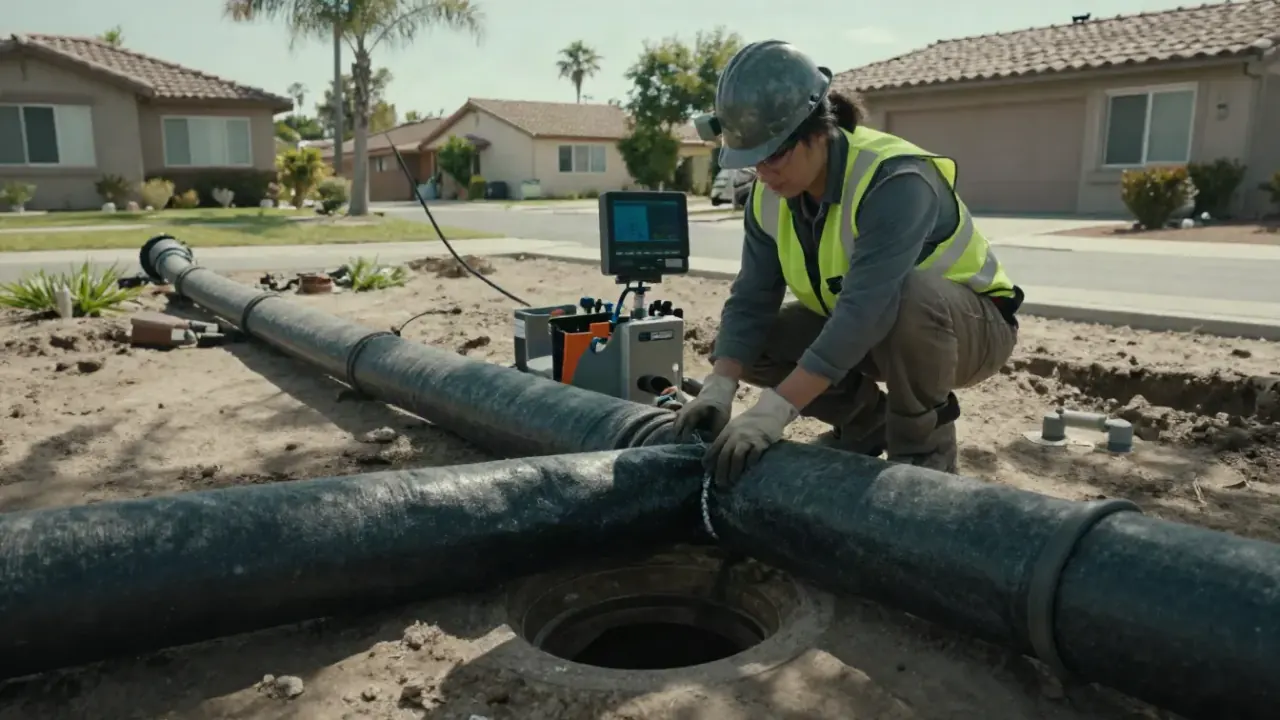
CIPP lining is the most common alternative to full trenchless replacement when the existing pipe still has its shape. We cure a resin liner against the inside wall, sealing cracks and joint gaps without removing the host pipe. It is a good fit for Stanton homes with root intrusion but no collapse.
View service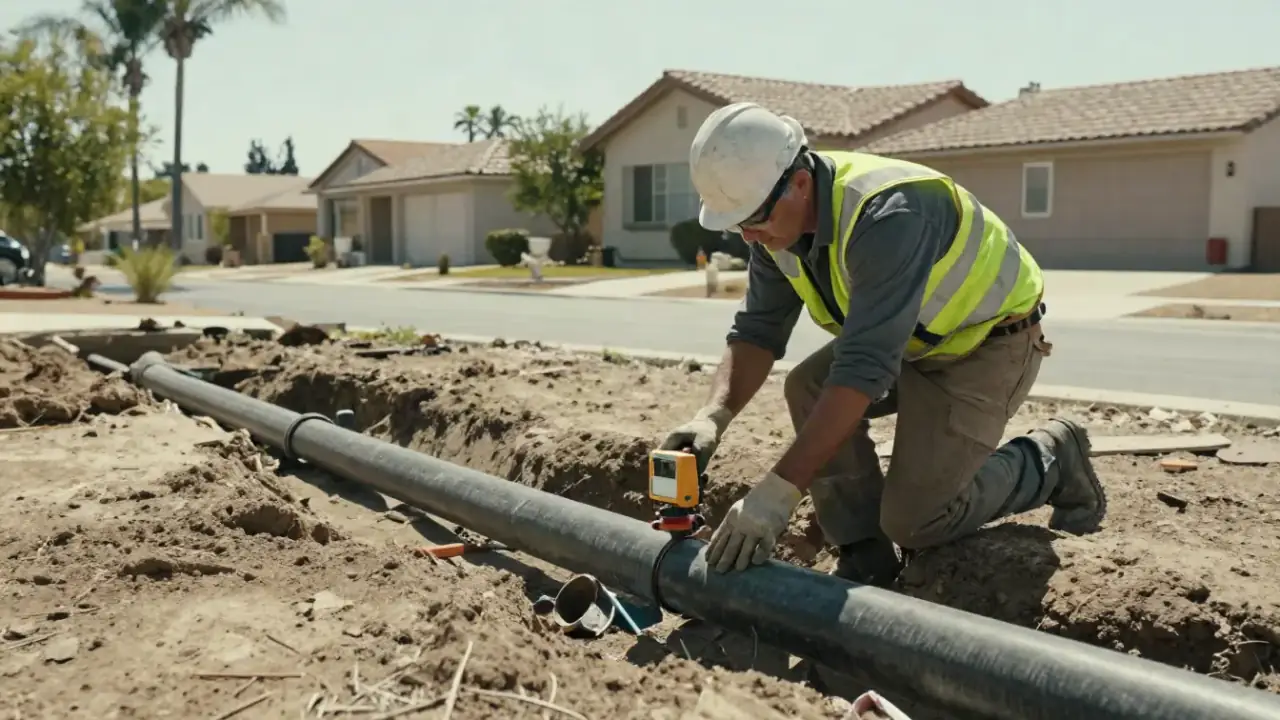
When the old clay is too far gone for a liner, pipe bursting pulls new HDPE through while fracturing the old pipe outward. You end up with a larger, seamless line. We use this on Stanton laterals with heavy offset or a collapsed section that a camera cannot pass.
View service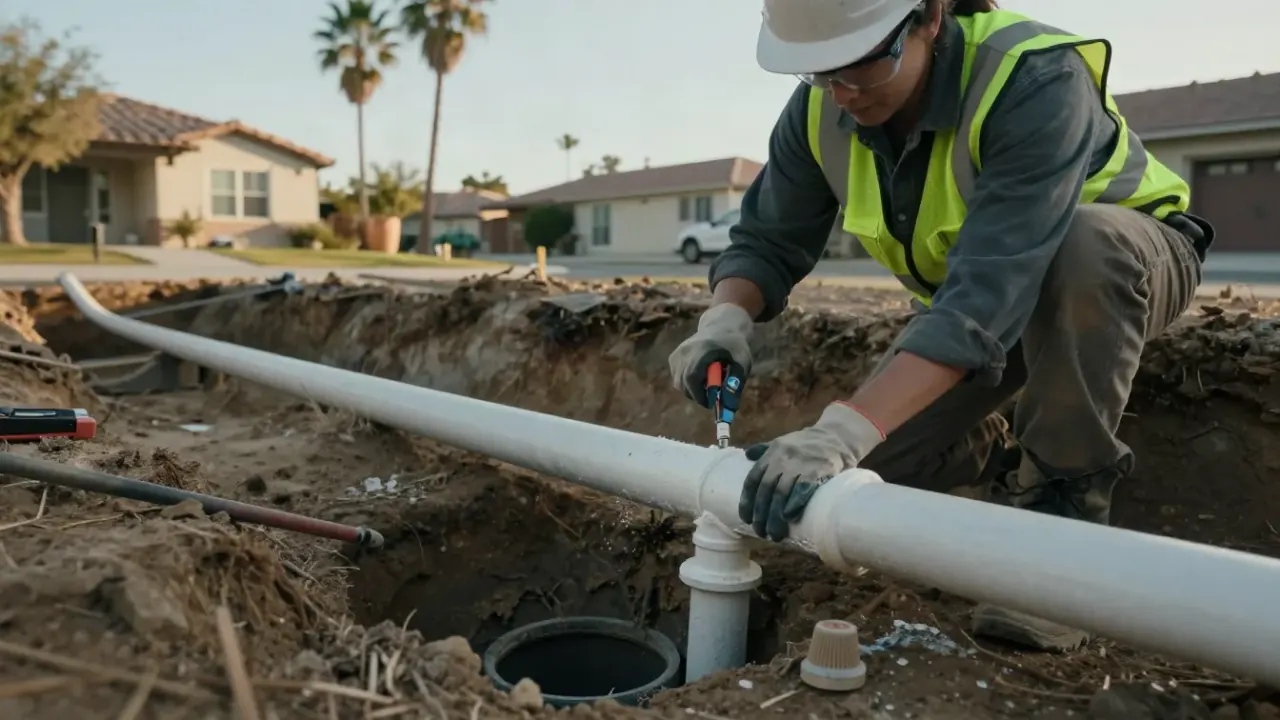
One bad joint or a single cracked section does not always mean a full replacement. We cut out the damaged segment and couple in new PVC, then camera-verify the repair. It is the least expensive option when the rest of the run is still sound.
View service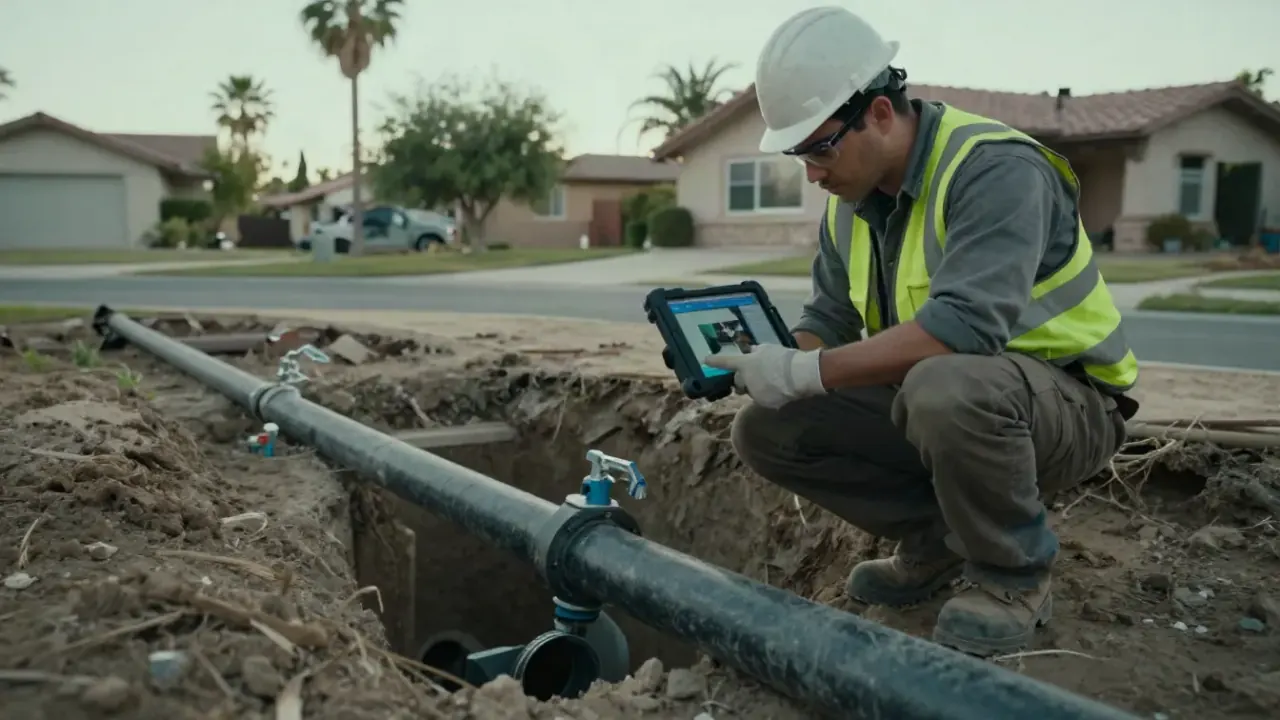
Every trenchless job starts here. We push a RIDGID camera through the cleanout, record the run, and locate defects with a pipe locator. You get the footage, which is also useful for home sales and insurance claims in Stanton.
View service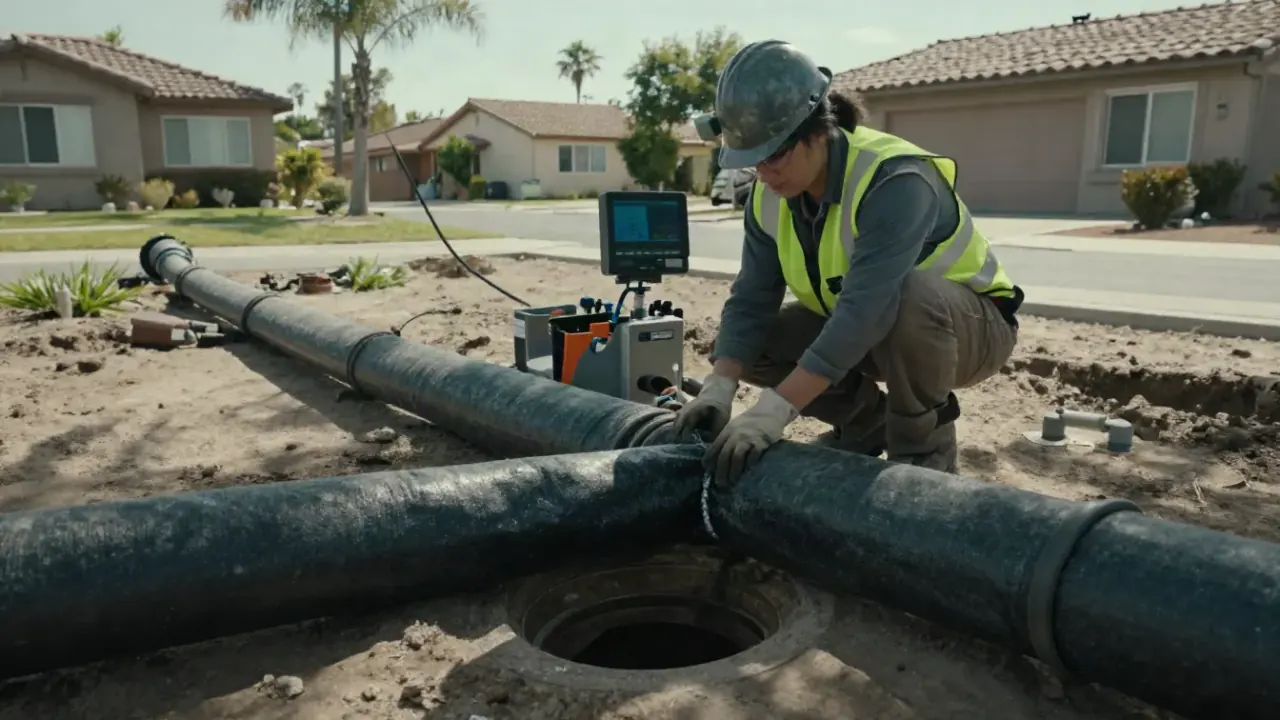
Reach us at (657) 359-9054 for sewer camera inspections, spot repairs, and trenchless replacement across Stanton, California. We answer emergency backup calls 24/7 and book standard inspections Monday through Friday. Tell us your cross streets and what the drains are doing, and we will get a tech out with the camera.