Focused arrival windows
Useful updates and clear arrival timing.
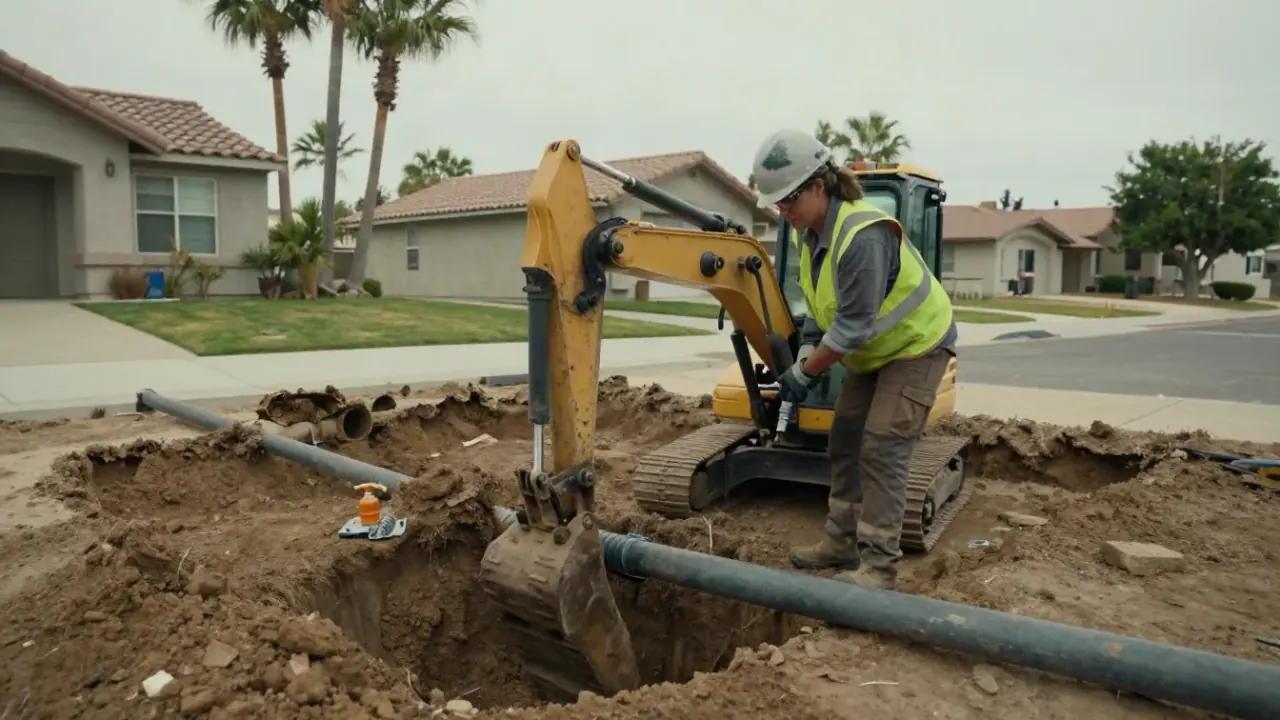
Sewer Line Repair in Western Avenue Corridor means digging up the right problem, not the whole yard. We run a sewer camera down your lateral, find the root intrusion, bellied pipe, or cracked section, then fix it trenchlessly wherever the line allows. We work the Western Avenue commercial strip, the older homes off Ball Road, and everything between ZIP codes 90680 and 92801. Same-day estimates, upfront pricing, and a line we test before we leave.
Useful updates and clear arrival timing.
Review the approach and price before deciding.
Equipped vehicles and respectful cleanup.
Neighbors serving neighbors with follow-through.
Sewer Line Repair in Western Avenue Corridor is a different job than it is two miles in any direction. The corridor runs from Western Ave north past Ball Road down to the Lincoln Avenue intersection, and the building stock flips block to block: 1950s and 60s single-family homes with original clay and cast iron laterals, then the Western Avenue commercial strip with its own heavier 4-inch and 6-inch lines. Those older laterals have had sixty-plus years of Orange County soil movement, parkway tree roots, and grease from decades of kitchens. When a line fails here, it usually fails at a joint, a bellied low spot, or wherever a parkway ficus or liquidambar found a crack. We run a sewer camera first, mark the depth with a pipe locator, and then choose between spot repair, CIPP lining, or full replacement. You get a straight answer about which one your line actually needs, and a price before we start.
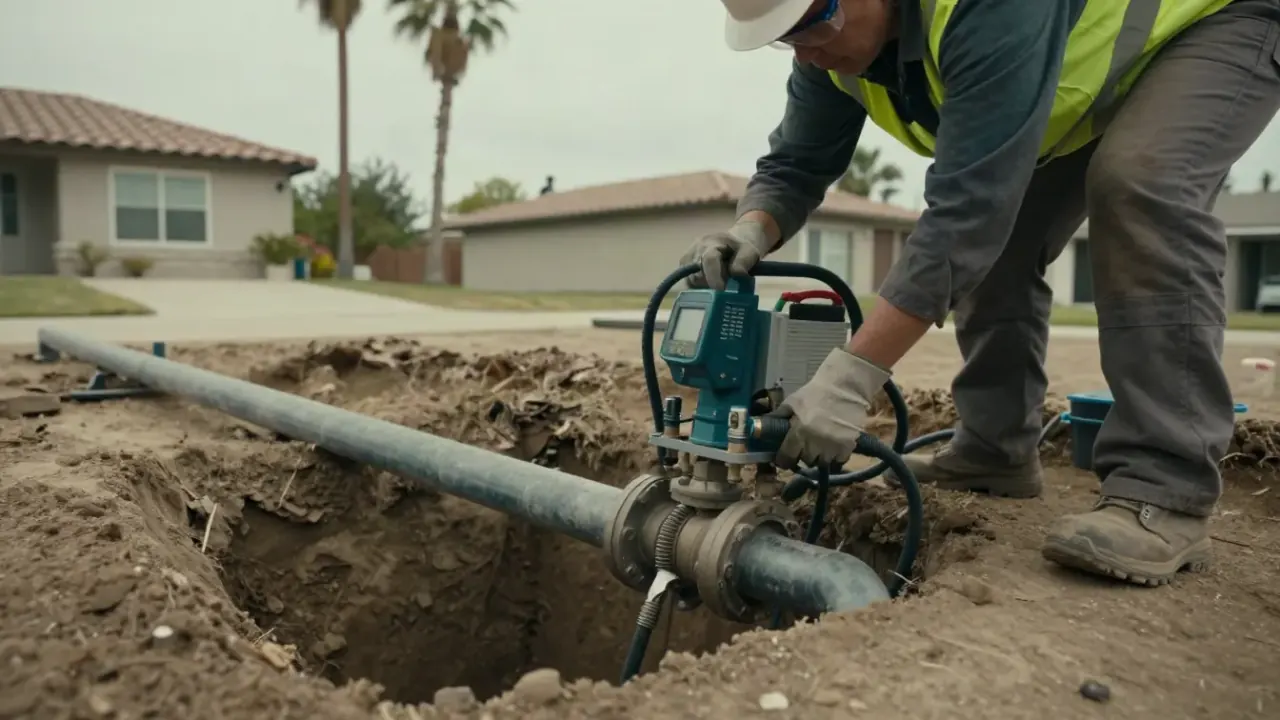
Demand on this corridor splits cleanly in two. North of Ball Road you get residential laterals with root intrusion and bellied pipe from decades of soil settling. On the Western Avenue commercial strip you get grease blockage and heavier flows that need a hydro-jetter, not a hand auger. If you are searching for affordable sewer line repair in Western Avenue Corridor near me, the honest answer is that the price depends entirely on what the camera shows. We inspect first, then quote.
Most Western Avenue Corridor lots have mature trees and poured driveways we would rather not destroy. Trenchless lets us rehabilitate the lateral from two small access pits, usually at the cleanout and near the city connection. We use this on the residential blocks off Ball Road and the Lincoln Avenue intersection where the front yard is landscaped and the driveway is original concrete.
View service →02CIPP lining is our go-to when the pipe is cracked or corroded but still round and structurally sound. We invert an epoxy-saturated liner through the lateral, cure it, and you end up with a smooth jointless pipe that roots cannot get into. On the older homes along Western Ave north, this often saves a full replacement and keeps the original clay in place as a host pipe.
View service →03When the lateral is collapsed, badly offset, or undersized, pipe bursting pulls a new HDPE pipe through the old one while fracturing it outward. We use it on the deeper laterals near the Western Avenue commercial strip where open-cut would mean cutting through a parking apron. You get a brand-new seamless line with no joints for roots to find.
View service →04A single cracked section or one bad joint does not always mean replacing the whole lateral. We excavate to the exact spot, cut out the damaged piece, and couple in new PVC with Fernco or mission couplings. On the residential streets off Ball Road this is often a two-to-four-hour job and the most affordable way to stop a recurring backup.
View service →05Every job on this corridor starts with a sewer camera. We push a RIDGID or Spartan Tool camera down the cleanout, record the footage, and mark depth and location with a pipe locator so you can see exactly what is wrong. For home sales in 90680 and 92801, we provide the recorded video and a written summary the buyer's agent can use.
View service →06Parkway trees along Western Avenue Corridor send roots straight into the joints of older clay laterals. We cut them out with a root cutter on a sectional machine or hydro-jetter, then either line the pipe or spot-repair the joint so they cannot come back. Just cutting roots without fixing the opening is a temporary fix, and we tell you that upfront.
View service →07A backup on the Western Avenue commercial strip is usually grease blockage; in the residential blocks it is more often roots or a bellied low spot. We clear the line first, camera it to confirm the cause, and repair whatever is actually failing. If sewage has reached a floor drain, we can also advise on the cleanup side before we close up.
View service →08Orange County buyers increasingly want the lateral scoped before closing, and Western Avenue Corridor homes with original clay pipe are exactly where that matters. We inspect, record, and give you a plain-language report on condition, defects, and what a repair would realistically cost. That report keeps a sale from stalling over a surprise at the eleventh hour.
View service →09Decades of soil movement in Orange County leave a lot of laterals with a low spot or a shifted joint. A bellied pipe holds water and debris, so it backs up even when nothing is blocking it. We locate the belly with the camera, then either re-grade that section with a spot repair or line through it if the offset is minor.
View service →Execution on this corridor comes down to access and depth. The residential lots off Ball Road and Western Ave north are typically shallow laterals, three to five feet down, which makes spot repair and CIPP lining fast. The commercial strip is deeper and often under concrete or asphalt, so we bring a vacuum excavator to pothole and confirm the line before we cut. California plumbing code requires the lateral to hold proper slope to the city main, and we check that with the camera before we call a job done. Parking is the other variable: on the Western Avenue commercial strip we schedule work outside peak business hours so we are not blocking a storefront. For residential streets we usually stage the truck in the driveway and keep the street clear. If you need same-day sewer line replacement in Western Avenue Corridor, call early, because the camera inspection has to happen before we can commit to a method.
Root intrusion is the most common cause of backups on the residential blocks, and roots re-enter any joint we leave open. Cutting alone does not solve it. We cut the roots with a root cutter or hydro-jetter, then camera the joint to see the opening. If the pipe is otherwise sound we line it with CIPP so there is no joint left for roots to find. If it is collapsed we spot-repair or burst it.
These pipes are brittle, offset at the joints, and prone to bellies. Open-cut replacement on a landscaped lot is expensive and disruptive. We default to trenchless methods here. CIPP lining handles cracked and corroded clay, and pipe bursting replaces collapsed or badly offset sections without tearing up the yard. We only open-cut when the line is too far gone to host a liner.
Restaurant and retail lines build grease fast, and a hand auger just punches a hole through it. The blockage returns within weeks. We hydro-jet the line at pressure to scour the full pipe wall, then camera it to confirm the grease is gone and check for any damage underneath. For recurring grease we recommend a maintenance schedule rather than repeated emergency calls.
Sewer lateral work in Stanton requires a licensed plumbing contractor. We hold the C-36 classification, which covers the repair, replacement, and lining of sewer laterals on both residential and commercial properties.
Our camera inspections follow the NASSCO PACP coding standard, so the footage and defect codes are consistent and readable by any other PACP-certified party, including a buyer's inspector during a home sale.
Any work inside a manhole or vault on the Western Avenue commercial strip falls under confined space rules. Our technicians are confined space certified, which matters on deeper commercial lines.
The problems we see here are shaped by the corridor itself: mature parkway trees over shallow laterals, 1950s and 60s clay pipe, and a commercial strip that produces grease. Orange County's expansive soil also moves enough to shift joints over time. Here are the four calls we get most, and how we handle each one.
Parkway trees along Western Avenue Corridor sit directly over the lateral, and roots seek moisture at the joints of older clay pipe. Once inside, they grow and catch debris until the line blocks. We cut the roots with a root cutter or hydro-jetter, then camera the joint to see the opening. If the pipe is sound we line it with CIPP so there is no joint left for roots to enter. Cutting alone is a temporary fix and we say so.
Decades of soil settling in Orange County leave low spots in the lateral where water and solids collect. A bellied line backs up even when nothing is actively blocking it, because the pipe no longer drains. We locate the belly with the camera and mark its depth. If it is a short section we re-grade it with a spot repair. If the offset is minor and the pipe is otherwise sound, we line through it to restore a smooth flow path.
Restaurants and food service on the Western Avenue commercial strip send grease into the lateral, where it cools and coats the pipe wall. A hand auger punches a hole through it and the blockage returns within weeks. We hydro-jet at pressure to scour the full pipe wall, then camera to confirm the grease is gone and check for damage underneath. For recurring grease we set up a maintenance schedule so the owner stops paying for emergency calls.
Original clay laterals from the 1950s and 60s are brittle and shift at the joints over time. Heavy soil movement or a single root can crack a section, and a cracked clay pipe eventually collapses into the flow path. We camera and locate the failure, then choose between spot repair and pipe bursting. Bursting pulls a new HDPE pipe through the old one, giving you a seamless line with no joints. It is the right call when the pipe is too far gone to line.
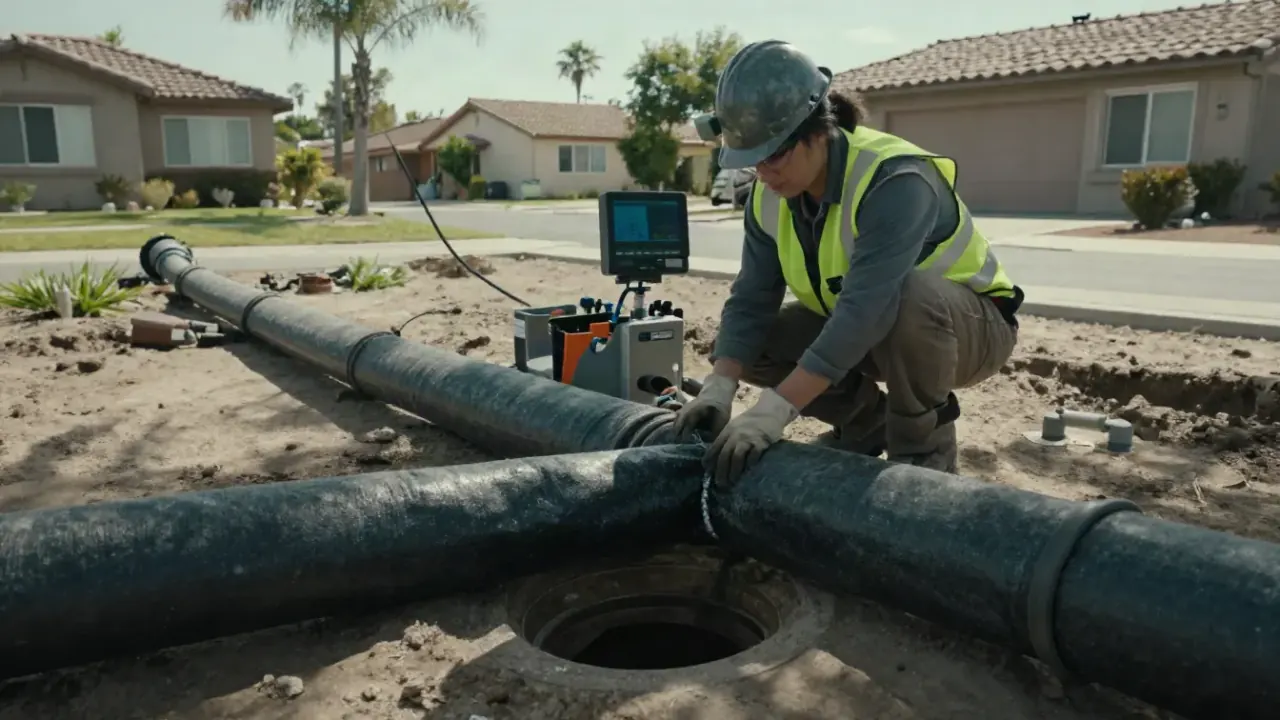
Sewer Line Repair in Western Avenue Corridor pricing comes down to three things: how deep the line is, how long the failed section runs, and whether we can go trenchless. A shallow spot repair on a residential block off Ball Road is a very different job than a deep commercial line under the Western Avenue strip. We give you a price before we start, and we do not add line items mid-job without telling you first. If you are comparing quotes and one is dramatically lower, ask whether it includes a camera inspection and a warranty on the repair. Ours does.
Shallower residential laterals off Ball Road and Western Ave north are faster to reach, which keeps labor down. Deeper commercial lines on the Western Avenue strip need more excavation and shoring, and that pushes the price up.
A single cracked joint is a spot repair. A long run of collapsed or badly offset clay pipe means lining or bursting the full lateral, which is a bigger job with a bigger price. The camera tells us which one you actually need.
Trenchless costs more in materials but far less in restoration. On a landscaped Western Avenue Corridor lot with a poured driveway, avoiding open-cut usually saves money overall even when the trenchless line item looks higher.
When you call, we do not need a GPS pin. Western Avenue Corridor has enough landmarks that we can find you fast. The Western Avenue commercial strip is the spine, and we orient off Ball Road, the Stanton Library, and Western High School depending on which end of the corridor you are on. If you are near the Lincoln Avenue intersection, tell us which side of Western you are on and we will be there.
The Stanton Library is a fixed reference point on the corridor and helps us pin down which block a caller is on when they give us a cross street but no house number.
Western High School anchors the north end of the corridor. When a call comes in near the school, we know to expect school-hour traffic and tighter street parking, so we plan the arrival window around it.
Ball Road is the main east-west cross street we use to split the corridor into north and south. It tells us immediately whether a job is on the residential blocks or closer to the commercial strip.
The commercial strip is the corridor's spine and the easiest way to describe a location. If you are on the strip, we know access is from the rear or side lot and we plan the truck staging accordingly.
The Lincoln Avenue intersection marks the south end of our regular Western Avenue Corridor coverage. It is a useful boundary for confirming we have the right block before we dispatch.
A continuous run of retail, restaurant, and service businesses along Western Avenue. The mix means grease-producing kitchens and higher-flow restrooms share the same lateral corridor, and rear-alley access varies block to block.
Ball Road crosses Western Avenue and is the quickest east-west route to the corridor from the surrounding Stanton streets. We use it to reach both the north and south halves of the corridor.
Western Avenue Corridor is not one uniform neighborhood. The blocks north of Ball Road look nothing like the commercial strip, and the housing near the Lincoln Avenue intersection has its own set of lateral problems. We work all of it, and we know which streets have the shallow clay laterals and which ones need heavier equipment.
The residential blocks north of Ball Road are mostly 1950s and 60s single-family homes with original clay laterals and mature parkway trees. Root intrusion and bellied pipe are the two calls we get most here, and the lots are tight enough that trenchless methods save a lot of landscaping. We are usually on this stretch within the hour, straight up Western from the shop.
South of the corridor toward the Lincoln Avenue intersection you get a mix of older homes and small multi-unit properties. Several of these were septic-to-sewer conversions, so the lateral routing is sometimes non-standard and needs a camera to map before any repair. Close to our regular route, so same-day camera inspections are common here.
The Ball Road area has a dense mix of residential and small commercial buildings, which means we carry both a hydro-jetter for grease lines and a root cutter for the residential laterals. Parking and access are easier here than on the main strip, so spot repairs move fast. Minutes from the corridor, and we can usually schedule a same-day estimate.
Around the Lincoln Avenue intersection the housing stock is older and the laterals are shallower, which makes them vulnerable to root intrusion and offset joints. It is also a common area for home sales, so lateral inspections before closing come up often. A short run down Western, and we keep this area on the regular inspection schedule.
These are the kinds of jobs we run on this corridor every week. Different problems, different fixes, same camera-first process. The numbers are real job outcomes, not estimates.
A 1962 home off Ball Road had backed up twice in six months. A previous company augered it both times and never scoped the line. We ran a sewer camera and found root intrusion at three separate joints plus a bellied section holding water. We cut the roots, then lined the lateral with CIPP so no joint remained for roots to re-enter. The line has not backed up since. Total job was one day, and the homeowner kept the original driveway and front lawn intact.
A restaurant on the Western Avenue commercial strip was backing up every few weeks despite regular augering. We hydro-jetted the full line at pressure to scour the grease off the pipe wall, then camera-inspected and found no structural damage. We set the owner up on a quarterly jetting schedule instead of repeated emergency calls. Backups stopped, and the owner cut emergency plumbing calls from roughly six a year to zero over the following twelve months.
A home sale near the Lincoln Avenue intersection stalled when the buyer's inspector flagged the lateral as suspect but could not confirm the defect. We performed a recorded sewer camera inspection to the NASSCO PACP standard, documented the offset joint and its depth, and gave both agents a written condition report with a repair cost range. The parties negotiated a credit based on our report and closed on schedule. The new owner had us do the spot repair the following month.
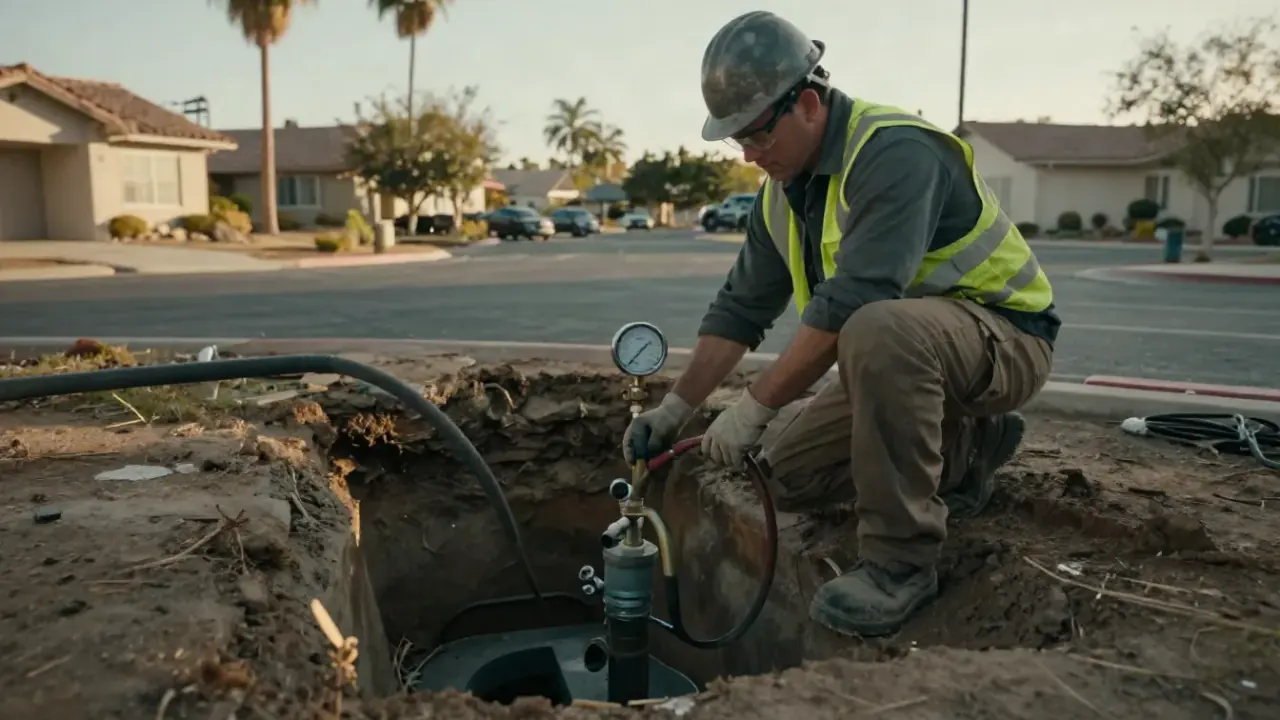
Our line backed up on a Sunday night and they had a camera down it within the hour. Turned out to be roots at two joints on our old clay lateral. They cut them out and lined the pipe the next day. No digging up the yard, no mess left behind. Fair price and they showed me the camera footage before and after.
I manage a shop on the Western Avenue strip and we were getting backups every couple months. They jetted the line properly instead of just punching through the grease, then set us up on a maintenance schedule. We have not had a single backup since. Straight talk, no upsell.
We were selling my mom's house near Ball Road and the buyer wanted the lateral scoped. They came out same day, recorded everything, and gave us a clear report on the offset joint. It let us negotiate instead of guessing. Honest about what needed fixing and what did not.
Southern California does not freeze like the Midwest, but the seasons still change what we see on this corridor. Fall and winter bring root activity and heavier rain, spring brings soil movement, and summer concentrates grease and odor problems. Knowing the pattern helps you get ahead of a backup instead of reacting to one.
Roots stay active in Orange County soil through fall, and the first rains of the season push debris through laterals that have been partially blocked all summer. This is when we see a spike in backup calls on the residential blocks.
Winter is our busiest season for emergency sewer line repair. Rain saturates the soil, which can shift already-offset joints, and heavier use during the holidays puts more load on the lateral. Roots that grew all year are at their thickest.
Spring soil movement in Orange County can shift joints and open new cracks, especially on older clay laterals. We also get a wave of lateral inspections during the spring home-buying season on this corridor.
Summer heat concentrates grease in commercial lines on the Western Avenue strip and makes sewer odor more noticeable. Low flow during vacations can also let debris settle in residential laterals.
Western Avenue Corridor is our home base, but the same crews cover the surrounding Orange County cities. If you are just outside the corridor, we still likely work your street. Here is how the nearby areas relate to us.
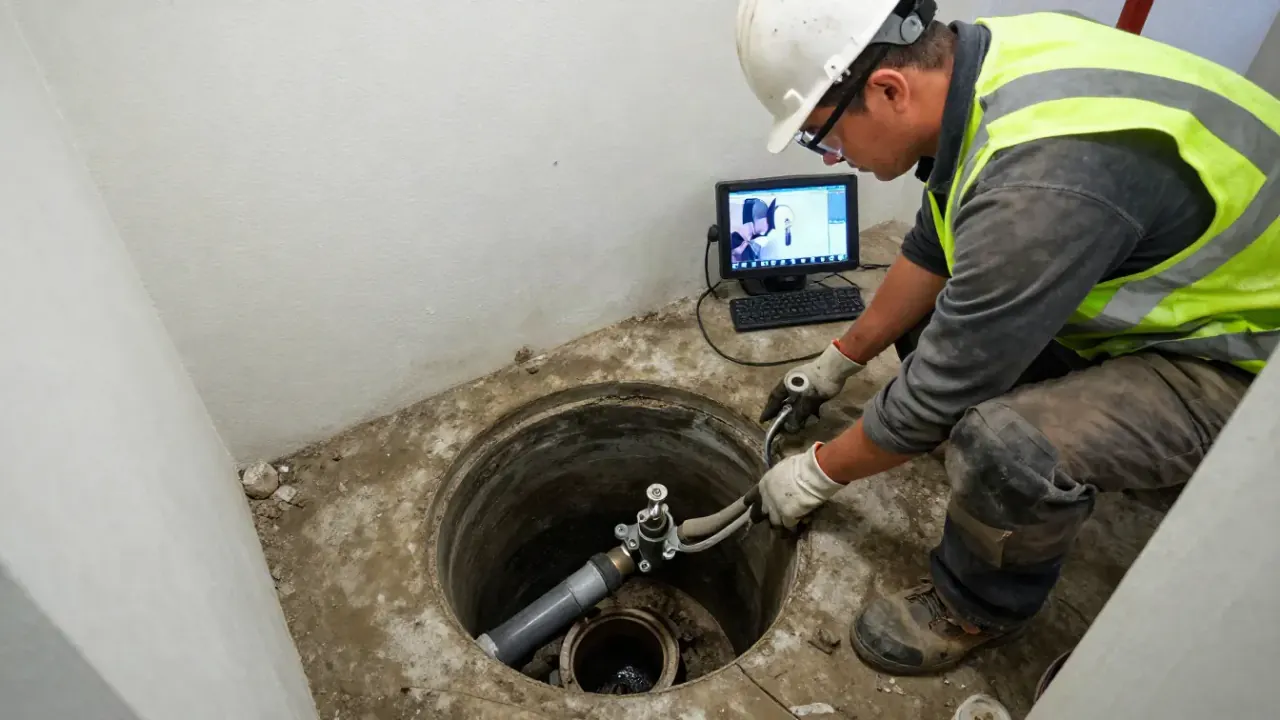
A short drive west of the corridor. We regularly run the same trenchless and camera equipment out to Midway City jobs.
Local coverage and details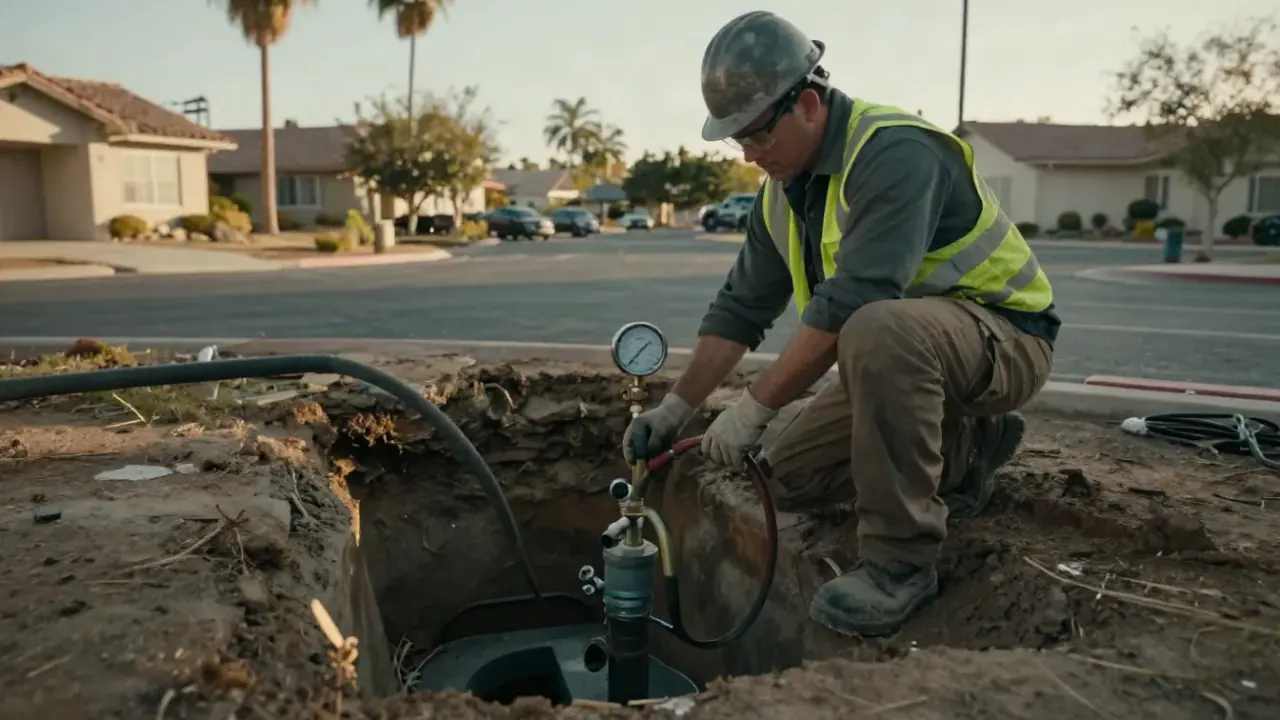
Just east of us. Beach Boulevard Corridor customers often get the same crew that works Western Avenue Corridor.
Local coverage and details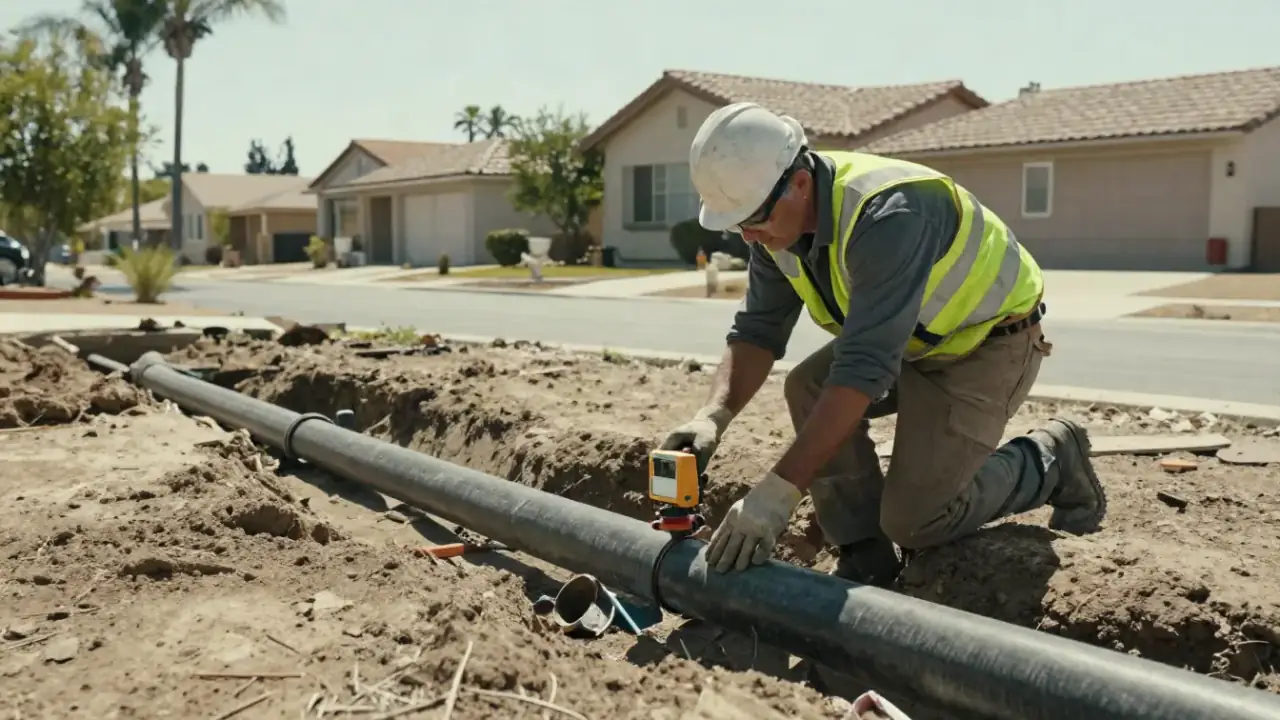
A few miles north. We cover Katella Avenue Corridor on the same schedule as Western Avenue Corridor.
Local coverage and details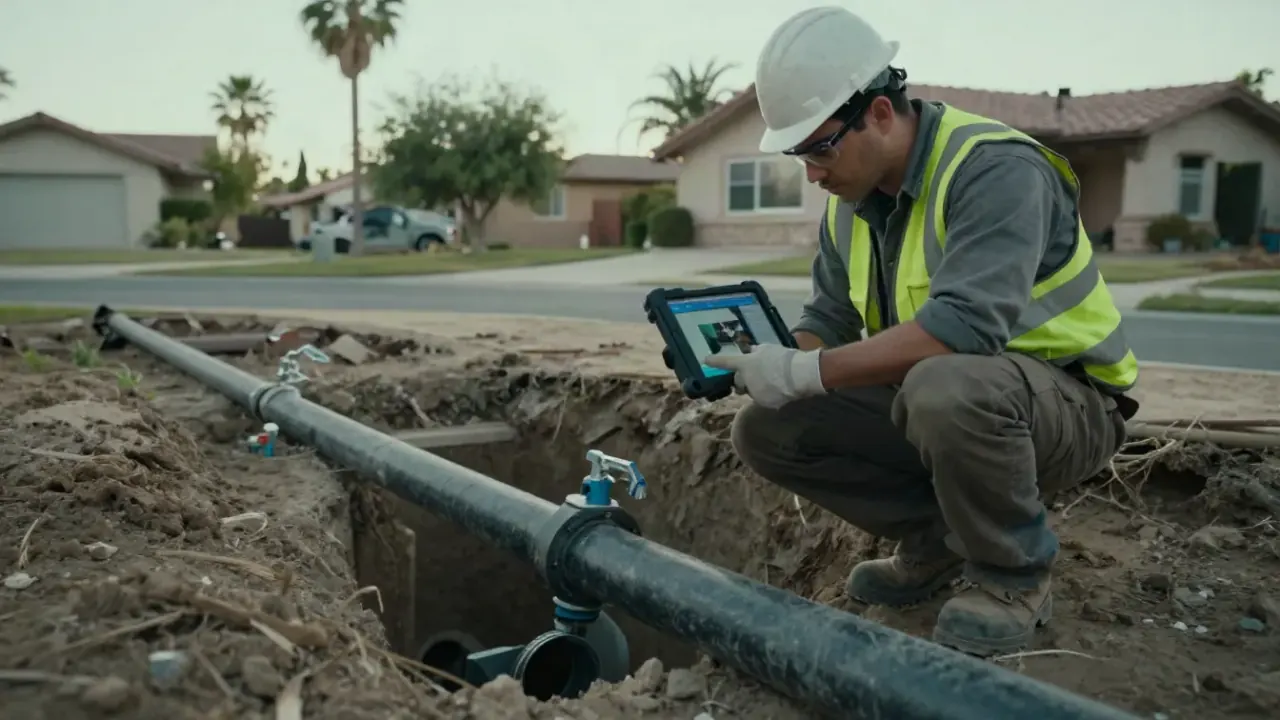
Nearby residential area. Plaza Pines Estates jobs are usually scheduled alongside our Western Avenue Corridor route.
Local coverage and detailsNot every company that answers the phone on this corridor does the same work. Some just auger and leave. Before you hand over a credit card, ask these five questions. The answers tell you whether you are getting a repair or a repeat visit.
A quote without a camera inspection is a guess. The camera shows whether you need a spot repair, a lining, or a full replacement. Any company that skips it is either guessing or planning to upsell you later.
Sewer lateral work in Stanton requires a licensed plumbing contractor and active liability coverage. Ask for the license classification and confirm the insurance. An unlicensed crew leaves you holding the liability if something goes wrong.
On a landscaped Western Avenue Corridor lot, open-cut means tearing up the yard and driveway. A company that only does open-cut will charge you for restoration you may not need. Trenchless is often faster and cheaper overall.
A repair without a warranty is a gamble, especially on older clay pipe. Ask what is covered and for how long. A company confident in its work will put the warranty in writing without hesitation.
You should see the before and after footage yourself. It confirms the problem was real and the repair actually fixed it. A company that will not share the footage is hiding something, and you have no way to verify the work.
NASSCO
OSHA
OSHA
$2M general liability and commercial auto
Member
Member
Typical 2026 pricing here runs $250 to $600 for a camera inspection and clearing, $1,200 to $3,500 for a spot repair, and $6,000 to $15,000 for a full trenchless replacement. Depth and length of the failed section drive most of the difference. We inspect first, then give you a firm price before any work starts.
The right company is the one that cameras your line before quoting and shows you the footage. We hold a California C-36 plumbing license, follow NASSCO PACP inspection standards, and warranty our repairs. Ask any company those three questions and the answer usually sorts itself out. Call us at (657) 359-9054 and we will show you the footage.
Yes. We run 24/7 emergency sewer line repair in Western Avenue Corridor CA, including nights, weekends, and holidays. If sewage is backing up into your home or business, call (657) 359-9054 and tell us it is an emergency so we prioritize the dispatch. Most emergency calls on this corridor get a crew out the same day.
You need replacement when the camera shows collapsed pipe, severe offset, or a long run of failed clay that cannot host a liner. If the damage is one joint or a short cracked section, a spot repair or CIPP lining usually solves it for far less. We only recommend replacement when the pipe is too far gone to repair.
Yes. We perform recorded sewer camera inspections for home sales in ZIP codes 90680 and 92801, following the NASSCO PACP standard. You get the video plus a written condition report on defects and a realistic repair cost range. That report lets buyers and sellers negotiate instead of guessing at the eleventh hour.
Not seeing your question? Our local team can help you understand urgency, scheduling and what to expect.
Ask the local team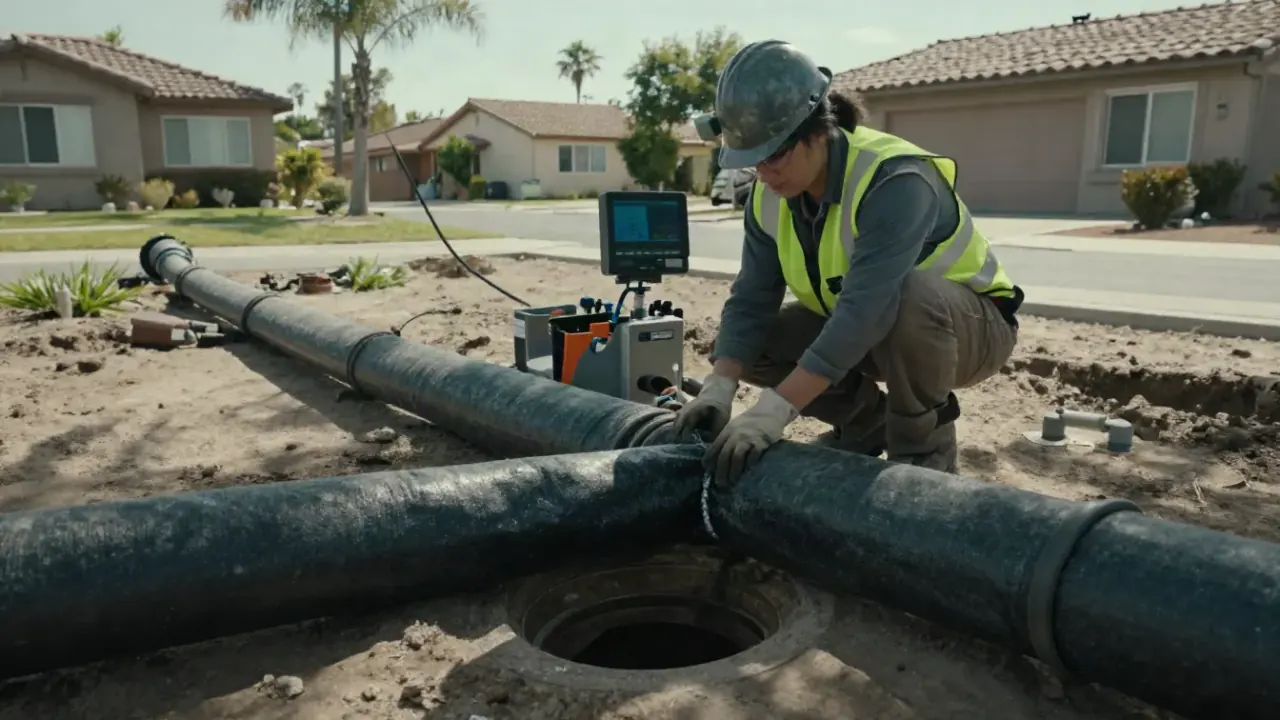
Reach us at (657) 359-9054 for sewer camera inspections, spot repairs, and trenchless replacement across Stanton, California. We answer emergency backup calls 24/7 and book standard inspections Monday through Friday. Tell us your cross streets and what the drains are doing, and we will get a tech out with the camera.