Focused arrival windows
Useful updates and clear arrival timing.
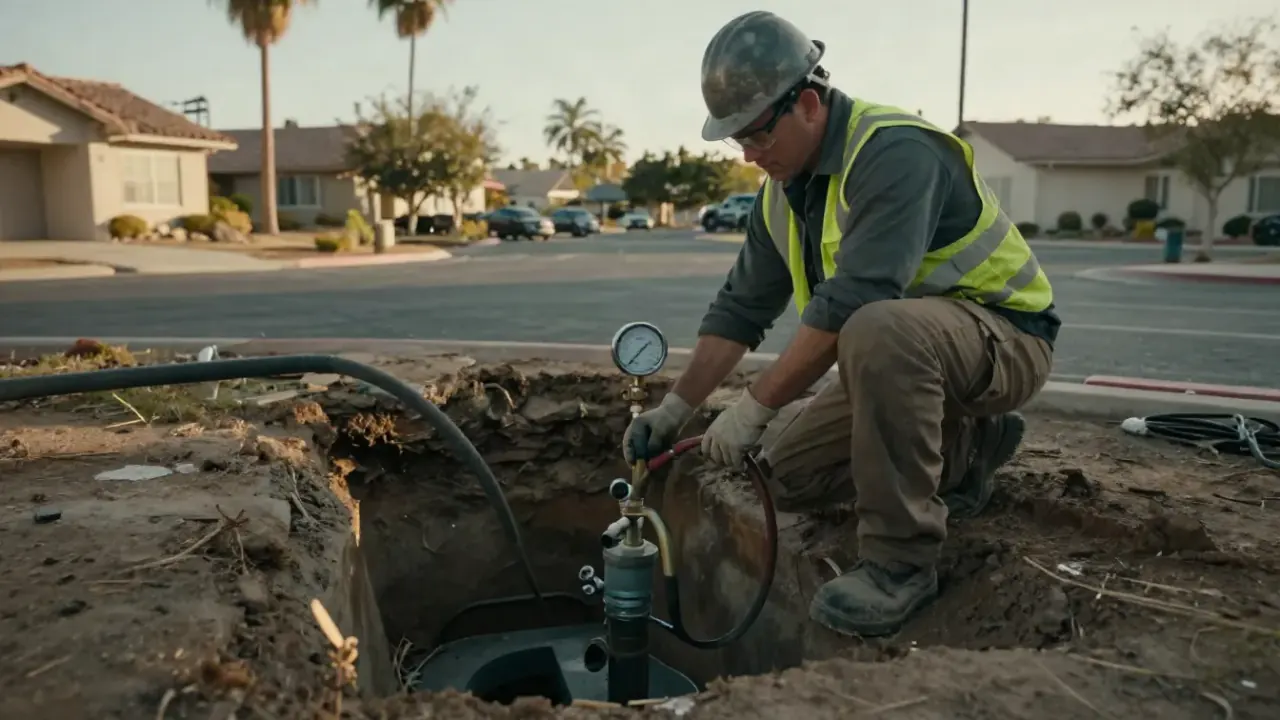
Pipe bursting Stanton CA pulls a brand-new HDPE pipe through your old failing sewer line, breaking the old pipe outward as it goes. No trench across the lawn, no torn-up driveway, no week-long mess. If your Stanton home is 40-plus years old and the lateral is original clay or cast iron, this is the repair that ends repeat backups. We camera the line first, confirm the size, and give you a straight answer the same day.
Useful updates and clear arrival timing.
Review the approach and price before deciding.
Equipped vehicles and respectful cleanup.
Neighbors serving neighbors with follow-through.
Every bursting job we run in Stanton includes the camera inspection, the access pits, the new HDPE pipe, the connections, and the testing. You get the pre- and post-job footage and the warranty paperwork at the walkthrough. We price the whole scope up front so you are not guessing at extras halfway through the dig.
We run a sewer camera and pipe locator through the lateral, measure the run, and confirm the pipe is a bursting candidate. You see the footage and the diagnosis before we mobilize equipment. If lining or spot repair is the better fix, we say so here.
We dig and shore a launch pit at the house connection and a receiving pit at the tie-in point, typically 4 by 6 feet each. We protect hardscape, contain spoils, and backfill with compaction when the pull is done. Surface restoration is included to the extent the site allows.
The new line is high-density polyethylene, heat-fused into one continuous length with no joints. We supply the couplings, elbows, and wye fittings needed at the house connection and the main. Pipe diameter is matched or upsized based on your fixture load.
We tie into the house connection and the city main, then pressure-test the run and re-camera it to verify grade and alignment. If we upsized the pipe, we confirm the main connection meets Stanton and Orange County requirements before closing the pits.
At the walkthrough you get the after-camera footage, a summary of what was replaced, and the written warranty on the new line. We answer questions on the spot and leave you with documentation you can hand to a future buyer or their inspector.
Share what is happening and receive a clear next step from the local team.
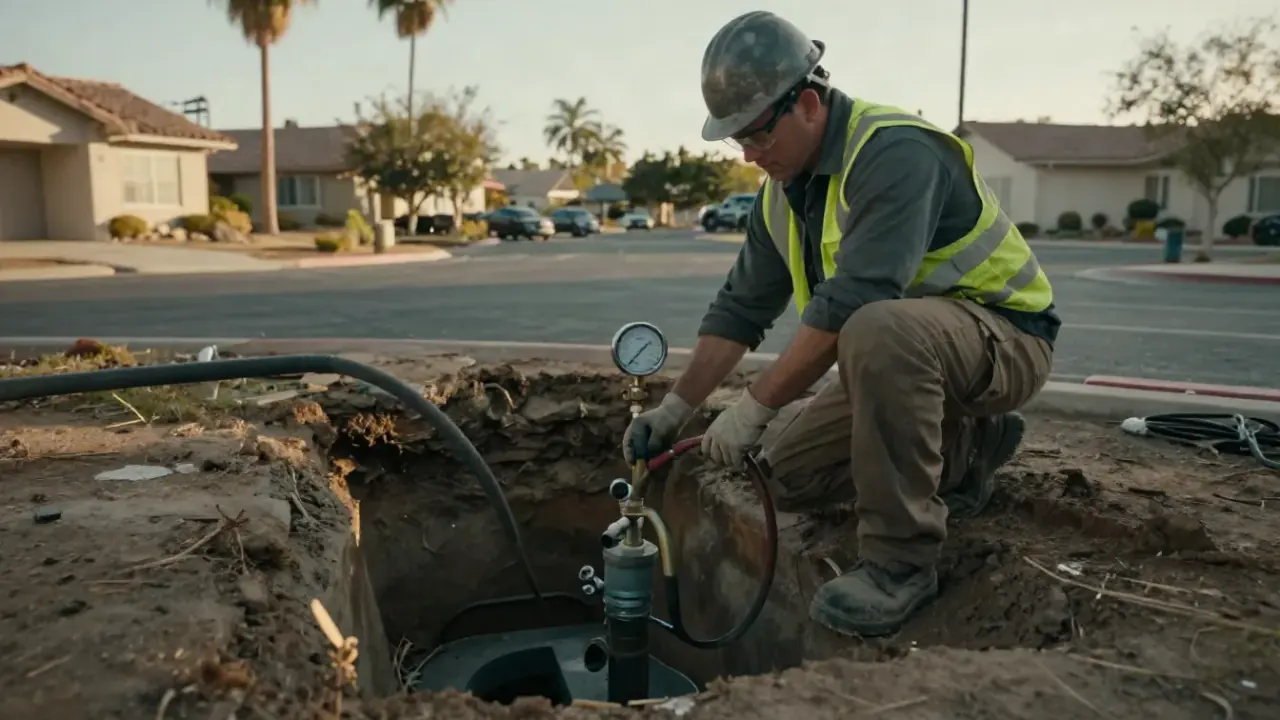
Pipe bursting Stanton CA is a trenchless replacement method that destroys the old sewer pipe from the inside while dragging a new high-density polyethylene (HDPE) pipe into the exact same path. We dig two small access pits, one at the house connection and one at the city main, then feed a bursting head and pulling rod through the existing line. The head fractures the old clay or cast iron outward into the surrounding soil, and the new HDPE follows behind it in one continuous piece. No joints underground means no root entry points.
Most Stanton laterals we open are original clay tile from the 1950s through the 1970s, and they fail in the same few ways: root intrusion at the joints, bellied sections where the soil settled, and offset pipe after decades of ground movement. If you are searching for sewer pipe bursting near me Stanton CA because you have snaked the same line three times in two years, that pattern is the tell. A camera inspection shows whether the pipe is a bursting candidate or whether CIPP lining is the better call.
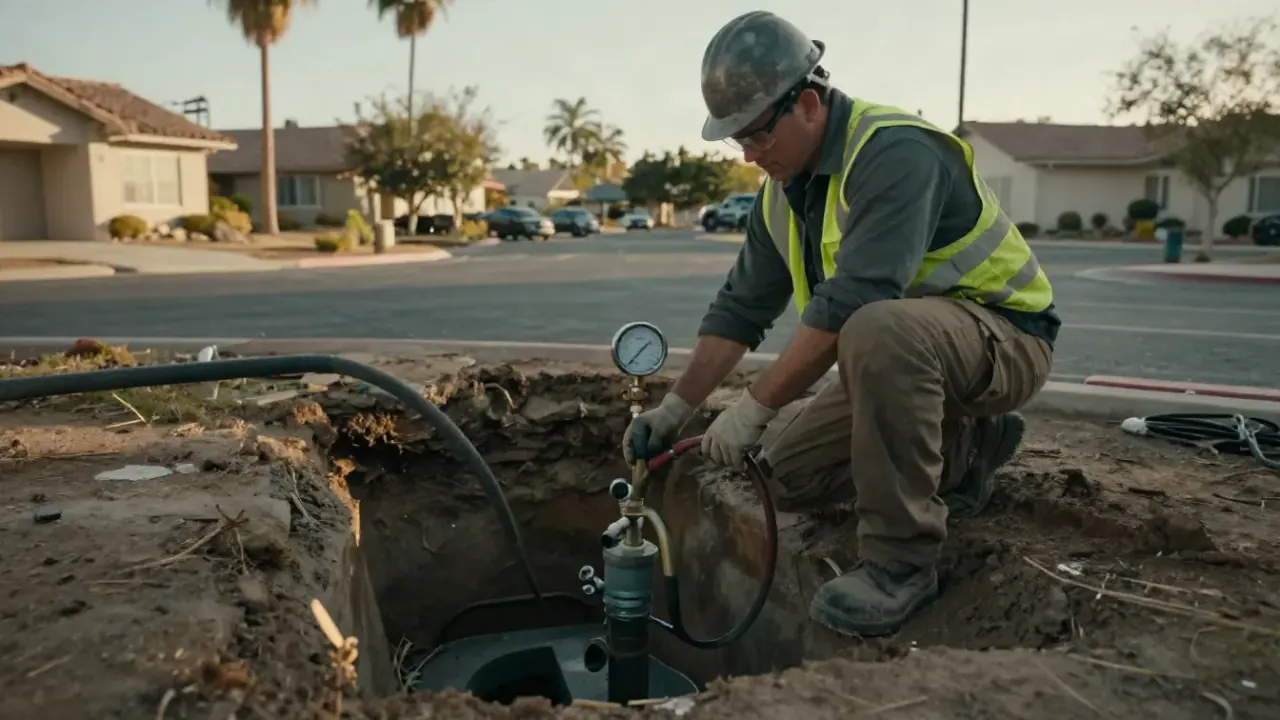
We run a sewer camera down the lateral and mark the path with a pipe locator so we know exactly where the line runs and where the pits go. You watch the footage with us. If we find a collapsed sewer line or a heavy root mass, you see it on the monitor, not just in our description. This step takes 45 to 90 minutes.
We dig a launch pit at the house connection and a receiving pit at the city main or the tie-in point, typically 4 by 6 feet each. On most Stanton lots the pits land in planting beds or turf rather than concrete. We lay protection boards and keep the spoils contained so your yard is not a mud pit when we finish.
The bursting head goes in first, attached to the pulling rod and the new HDPE behind it. The winch pulls the head through the old pipe, fracturing it outward while the new pipe follows. A 50-foot residential run usually takes two to four hours of pulling time, depending on soil and how badly the old clay has deteriorated.
We tie the new HDPE into the house connection and the city main with proper couplings and fittings, then pressure-test the run and re-camera it to confirm grade and alignment. If we upsized the pipe, we verify the connection at the main meets city requirements before we close anything up.
We backfill the pits, compact in lifts, and restore the surface as close to original as the site allows. Then we walk the job with you, show you the post-job camera footage, and hand over the warranty paperwork. Most Stanton jobs wrap in one to two days total.
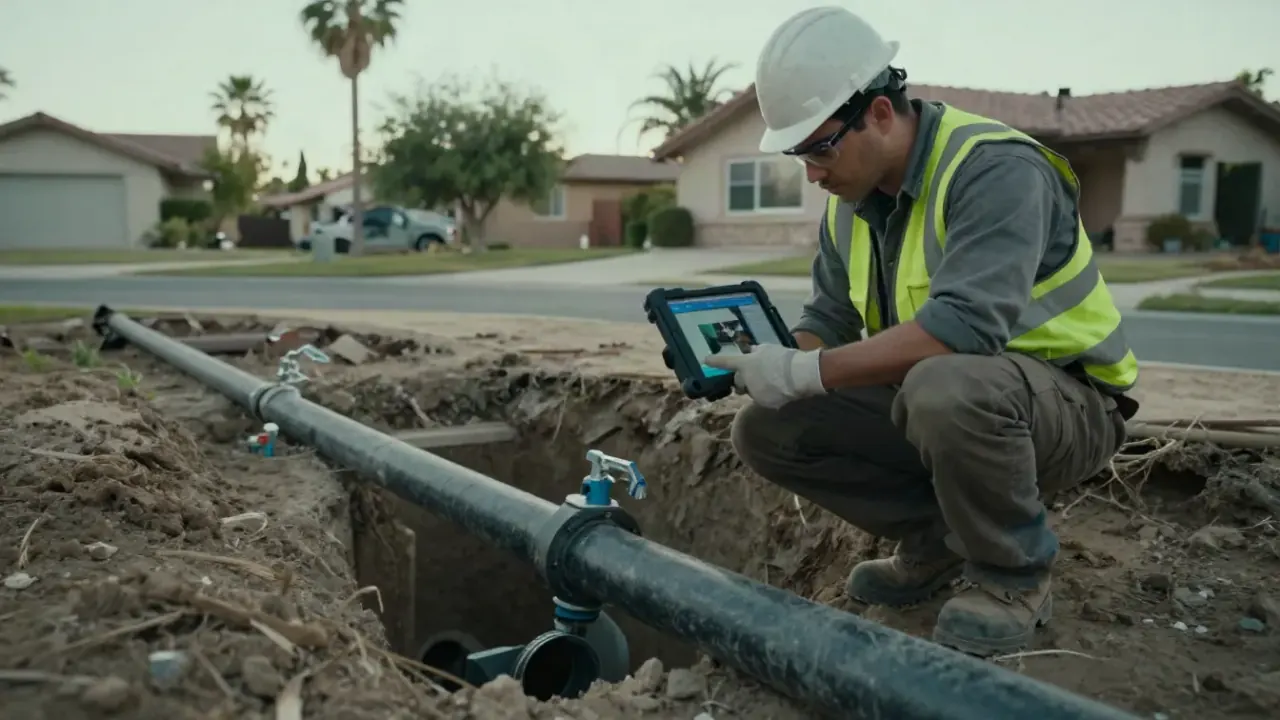
We run a RIDGID or Spartan Tool camera through the lateral to assess condition and mark the path above ground. The locator tells us exactly where the pits go and how deep the line runs.
The bursting head and pulling winch do the actual replacement. We match head size and pulling force to the host pipe diameter and soil conditions so the old pipe fractures cleanly without damaging the new HDPE.
Before the pull we clear roots and debris with a hydro-jetter and root cutter so the bursting head is not fighting a packed line. This also gives us a clean camera view for the pre-job assessment.
HDPE sections are joined with heat fusion rather than mechanical couplings, creating a continuous jointless pipe. Fusion joints are as strong as the pipe wall itself, which is why roots cannot exploit them.
On tight Stanton lots or where utilities run close to the lateral, we use a vacuum excavator to expose the line with minimal disturbance. It is slower than a shovel but far safer around gas and water lines.
Our technicians are NASSCO PACP certified, which means the camera footage is coded to a national standard rather than described loosely. You get a consistent, documented condition report that a future inspector or buyer's agent can read and trust.
For most Stanton residential laterals we use static bursting, where a winch pulls the bursting head through the old pipe at a controlled speed. It is quieter and more precise than pneumatic bursting and works well in the tight lots common on older Stanton streets.
Every new line is assembled with heat-fused HDPE joints and pressure-tested before backfill. We re-camera the run afterward to confirm grade and alignment, so the documentation covers both the pipe condition and the installation.
Every access pit is treated as a permit-required confined space. Our crews hold confined space certification and follow OSHA safety certification procedures on entry, ventilation, and retrieval. That is not paperwork for us, it is how the crew goes home safe.
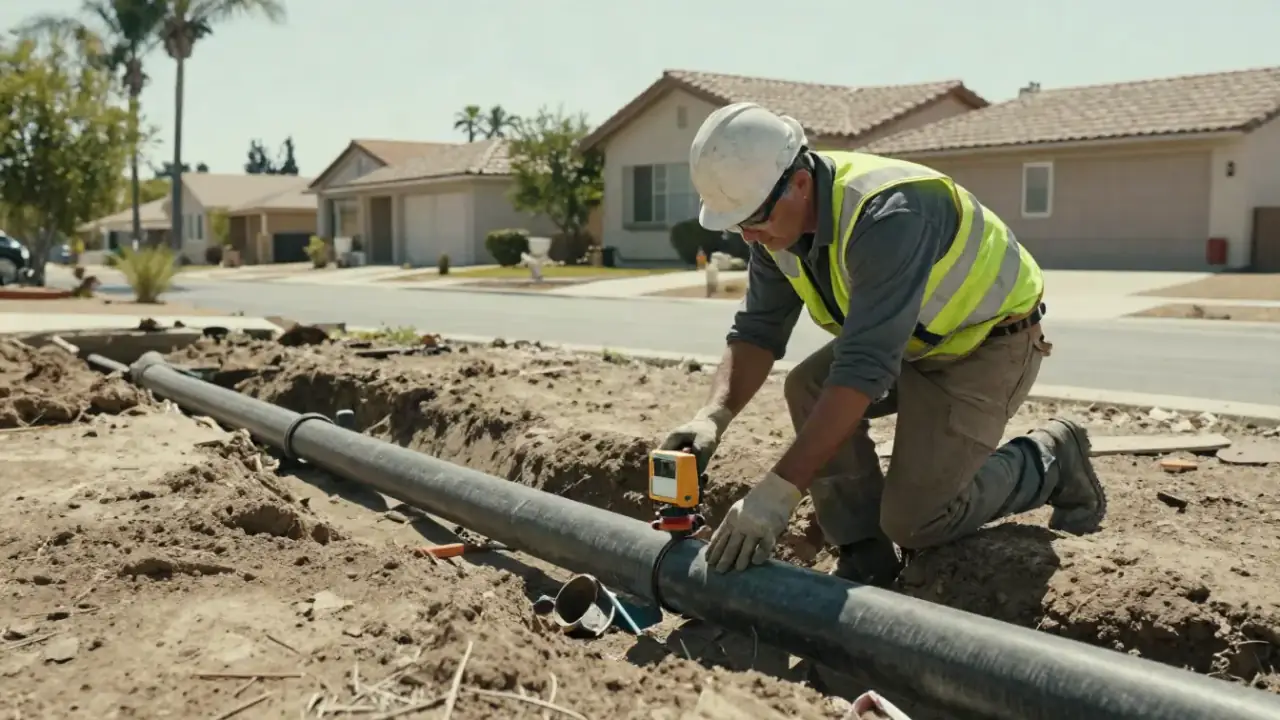
We camera the line, confirm the joints are cracked but the pipe is still round enough to burst, and pull new 4-inch HDPE through the same path. Two pits, one day, no trench through the lawn. The homeowner stops paying for annual root clearing and gets a jointless line with a written warranty.
Pipe bursting lets us upsize the lateral without a full excavation. We verify the host pipe condition, pull a larger HDPE line, and confirm the city main connection meets Stanton requirements. The addition gets the flow capacity it needs, and the yard and driveway stay intact.
Lining would follow the sag, so we burst the line instead and restore grade. The access pits go in the planting beds on either side of the walkway rather than through the concrete. The low spot is gone, the concrete stays poured, and the tenant stops calling about backups.
We run a sewer camera inspection, document the condition, and quote pipe bursting so the seller can decide before escrow deadlines. If the deal moves fast, we can schedule the pull around the closing timeline. The lateral is replaced and documented, and the sale closes without a last-minute credit negotiation.
Stanton's housing stock is mostly mid-century, and that shapes every job. The laterals we open along the Katella Avenue Corridor and Western Avenue Corridor are typically original clay tile or cast iron installed between the 1950s and 1970s, set 3 to 6 feet deep in soil that has shifted plenty over the decades. Roots from mature street trees and backyard citrus find every joint. We see bellied pipe where old lawns were overwatered and offset pipe where the ground has moved. Orange County code and Stanton's permitting process mean the connection at the city main has to be documented, and we handle that part. If you are looking for affordable pipe bursting Stanton California, the honest answer is that bursting usually beats open trench once you add landscape and concrete restoration back in. We schedule around the fall and winter rainy season, when saturated soil makes pits messier and backups more likely, and we keep 24/7 crews available for emergencies.
Larger lots with mature trees mean longer lateral runs and heavier root pressure at the joints. Bursting avoids trenching through established landscaping.
Newer construction with PVC laterals rarely needs bursting, but we still camera lines here for home sales and ADU additions.
Older commercial and residential mix with laterals running under concrete and parking areas. Pipe bursting keeps the hardscape intact.
Tight lots and shallow utilities make vacuum excavation and careful pit placement the norm on these bursting jobs.
Root intrusion is the number one cause of Stanton lateral failures. Bursting removes the joints entirely, which is why it outperforms repeat snaking.
Ground movement produces offset and bellied pipe over time. Bursting restores a straight, continuous run rather than coating a sagging line.
Saturated soil raises groundwater and pushes backups sooner. We schedule bursting before the rainy season when possible and run 24/7 response when it hits.
Depth affects pit shoring and job time. Deeper mains mean more shoring and a longer day, but the pull itself stays the same.
A 1958 ranch home with original clay tile and roots at every joint. The homeowner had snaked the line twice in 18 months and was facing a third backup before the holidays. Camera footage showed cracked joints and a partially collapsed section near the house connection.
We pulled new 4-inch HDPE through the same path in one day. Post-job camera showed a clean, jointless line on grade. The homeowner cancelled the annual root treatment and has had no backups since.
Maintenance: No root treatment needed on a jointless HDPE line. We recommend a camera check every three to five years, or before a home sale, to document condition.
A rental property with a recurring clog that snaking could not fix. The camera showed a bellied section under a concrete walkway holding water and solids. Two other companies quoted open trench through the concrete.
We burst the line from pits in the planting beds on either side of the walkway and restored grade with new HDPE. The concrete stayed poured. The tenant stopped calling about backups within the week.
Maintenance: Keep grease out of the kitchen drain and schedule a camera check every few years. The new line has no joints to catch debris.
A seller's lateral failed the buyer's inspection two weeks before closing. The camera showed offset joints and root intrusion along a 45-foot run. The buyer's agent wanted a credit large enough to cover open-trench replacement.
We inspected, quoted, and completed pipe bursting in two days. The post-job footage and warranty paperwork went to the buyer's agent, and the sale closed on schedule without a credit for the lateral.
Maintenance: Hold onto the post-job footage and warranty for future sales. A camera check every three to five years keeps the documentation current.
Snaking and jetting buy time. They do not fix a pipe that is cracked, offset, or root-filled at every joint. These are the failures we see most often on Stanton laterals, and how bursting ends them.
Roots find the same joints each season, so you pay for a clearing every 12 to 18 months and still risk a backup during the holidays or a rainy week. Bursting replaces the jointed clay pipe with one continuous HDPE line. There are no joints left for roots to enter. We cut and clear the existing roots during the pull, and the new pipe keeps them out permanently.
A low spot holds water and solids, so the line clogs even when nothing is flushed that should clog it. Lining cannot correct the grade because it follows the sag. Pipe bursting pulls a new pipe through the old path and restores continuous grade. We verify alignment on camera after the pull so the low spot is gone, not just coated over.
Offset joints catch debris and toilet paper, and they get worse with each dry season and winter rain cycle. Eventually the offset becomes a full blockage or a collapse. The bursting head fractures the offset sections outward and the new HDPE takes their place in a straight, continuous run. We size the new pipe to match or exceed the original diameter so flow improves.
A failed lateral can stall escrow or cost you thousands in credits when the buyer's inspector runs a camera and finds cracked or root-filled pipe. We inspect, document, and replace the lateral before the buyer's inspector gets there. The post-job footage and warranty paperwork give the buyer's agent something concrete to review, which keeps the sale moving.
$6,000 - $15,000 depending on run length, depth, diameter, and surface conditions
Typical 2026 pricing for residential pipe bursting in Stanton runs $6,000 to $15,000, with most single-family laterals landing between $8,000 and $12,000. The range is wide because run length, depth, pipe diameter, and what sits over the line all move the number. We camera the lateral first and quote the actual scope in writing, so you are comparing real numbers rather than phone guesses. When you add back landscape and concrete restoration, bursting usually comes in below open-trench replacement for the same result.
Bursting replaces the pipe instead of patching it, so you are not paying for the same repair twice. Add up two or three years of root clearing, emergency calls, and the landscape bill from open trench, and the bursting number usually wins.
A 50-foot lateral at 4 feet deep is a straightforward one-day job. Longer runs and deeper mains mean more shoring, more pipe, and more labor. Depth also affects how much soil we have to move around the pits.
Matching the existing 4-inch line is the baseline. If you need a larger HDPE pipe for an ADU or added fixtures, the material cost and pulling force go up, and the city main connection may need a different fitting.
Turf and planting beds are the easiest. Concrete, pavers, or a driveway over the lateral add restoration cost, and sometimes require a different pit layout to avoid cutting the hardscape.
A cracked but round clay pipe bursts cleanly. A collapsed sewer line or heavy offset may need extra excavation or a different approach, which changes the scope. That is why we never quote without camera footage.
Tying into the city main in Stanton has to meet Orange County requirements. If the connection needs a new fitting, a saddle, or extra shoring, that work is part of the quote rather than a surprise line item.
Pipe bursting is not a job you hand to a general handyman with a rented winch. It takes a crew that reads camera footage correctly, sizes the new pipe right, and knows when the host pipe is too far gone to burst. Our technicians hold NASSCO PACP certification for pipeline assessment and work under a California contractor license C-36. We carry confined space certification and OSHA safety certification because every pit is a permit-required space. We run RIDGID and Spartan Tool cameras on every inspection and document the footage for you.
Third backup in two years and I was done snaking it. They cameraed the line, showed me the roots packed into every joint, and quoted pipe bursting the same visit. Two pits in the side yard, new pipe pulled in one day, and the grass was back to normal in a couple weeks. No trench through the middle of my yard.
Our 1962 house had original clay tile and a bellied section under the walkway. Two other companies wanted to tear up the concrete. These guys burst the line instead and upsized it to 4-inch HDPE while they were in there. Camera footage before and after, clean job site, and the price matched the quote.
We had a tenant with sewage backing up on a Friday night. They came out, cleared it, and found the lateral was cracked and offset. By Wednesday the pipe bursting crew had a new line in and tested. They kept us updated the whole way and handled the city main connection without drama.
Pipe bursting is a trenchless replacement method: a bursting head travels through your old clay or cast iron lateral, fractures it outward, and pulls a new HDPE pipe into the same path. In Stanton we use it on laterals that are cracked, root-filled, or offset but still intact enough to burst. You get a jointless new pipe with only two small access pits instead of a full trench.
Residential pipe bursting in Stanton generally runs $6,000 to $15,000 depending on run length, depth, pipe diameter, and whether concrete or hardscape sits over the line. A straightforward 50-foot lateral in open turf sits near the low end. Longer runs, upsizing, or a city main tie-in that needs extra work push toward the high end. We inspect first and quote the actual scope, not a phone estimate.
It depends on the pipe. CIPP lining coats the inside of a structurally sound pipe and is usually cheaper, but it cannot fix a bellied pipe, a collapsed sewer line, or a lateral that needs upsizing. Pipe bursting replaces the pipe entirely and restores grade and diameter. If your camera footage shows heavy offset or a sagging sewer line, bursting is the honest recommendation.
Most residential jobs take one to two days from pit digging to backfill. The pull itself is usually two to four hours for a 50-foot run. Camera inspection and locating add 45 to 90 minutes up front. If we are working under a driveway or dealing with a deep main, plan on the second day. You typically have full use of your plumbing the same evening.
Not seeing your question? Our local team can help you understand urgency, scheduling and what to expect.
Ask the local teamNot every failing lateral needs full replacement. Trenchless repair fixes isolated damage through small access points, and we often combine it with pipe bursting when only part of the run is deteriorated. We camera the line first and tell you which approach actually fits your pipe.
View service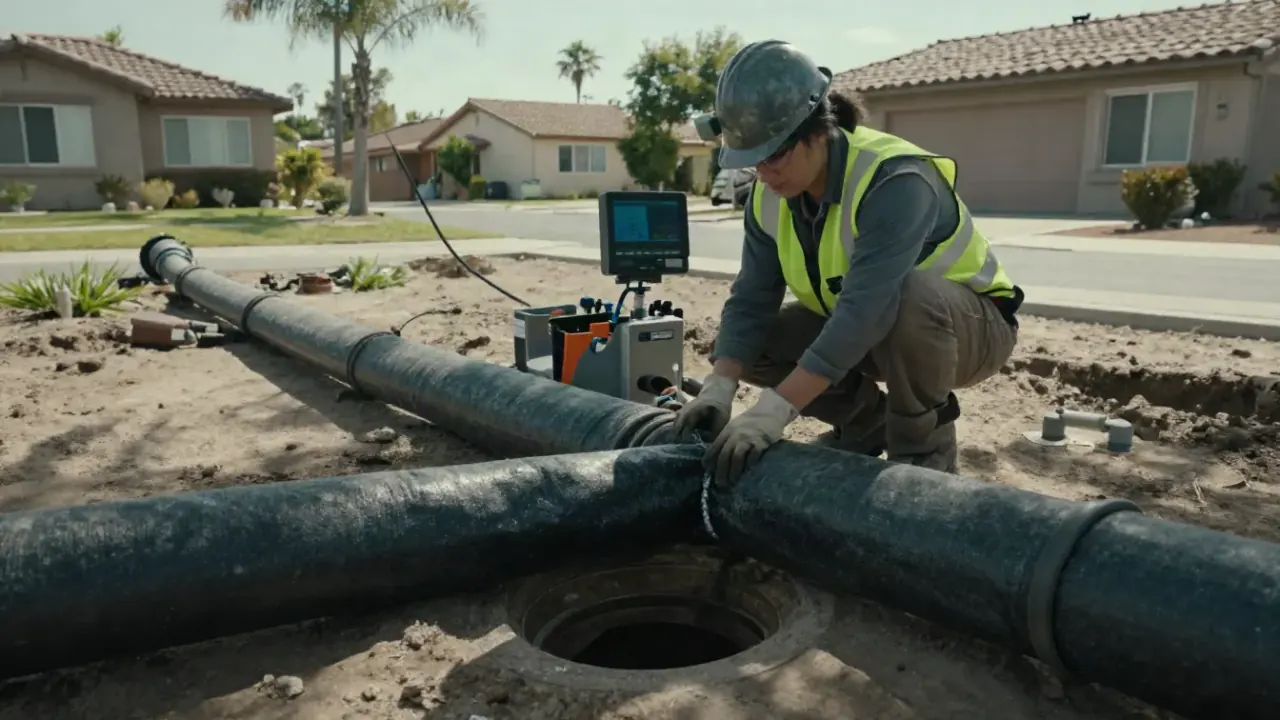
CIPP lining installs an epoxy resin liner inside a sound pipe and cures it in place. It is the right call when the pipe is cracked or root-damaged but still round and on grade. If your footage shows a bellied pipe or heavy offset, we steer you to bursting instead.
View service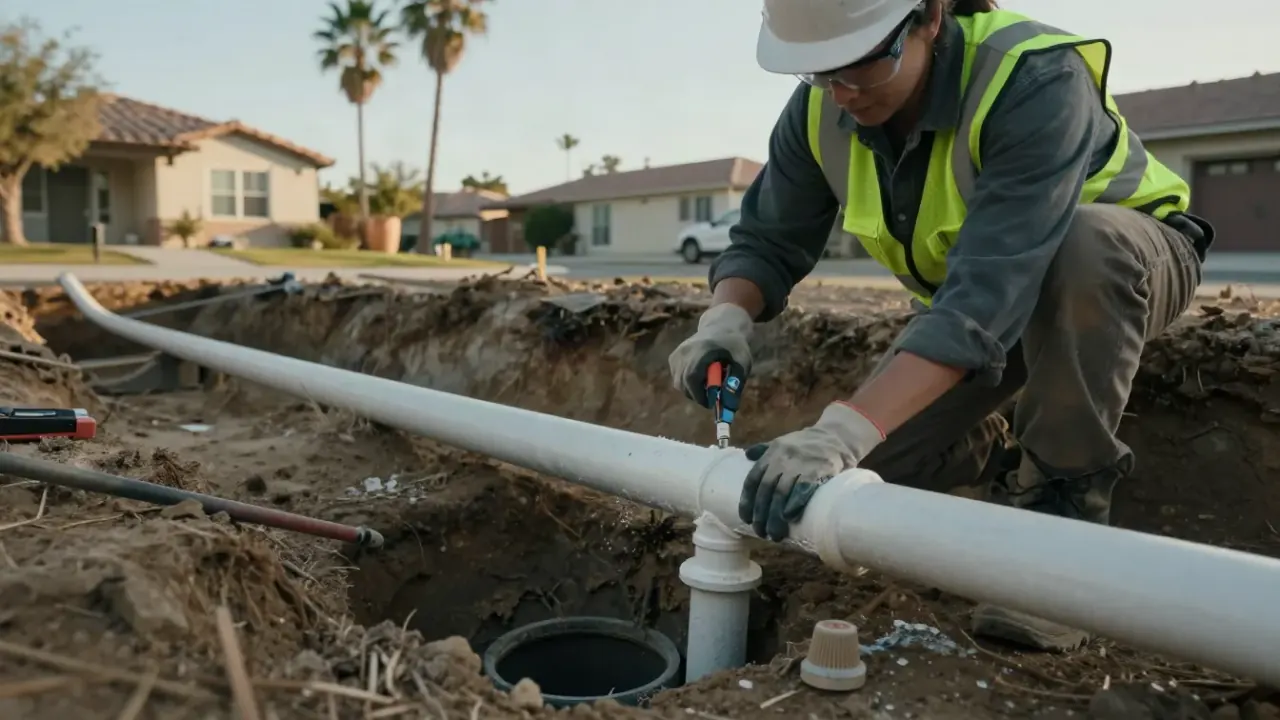
A single cracked section or one failed joint can be cut out and replaced without touching the rest of the lateral. Spot repair is the budget option when the camera shows one bad spot in an otherwise healthy pipe. We only recommend it when the rest of the run tests clean.
View service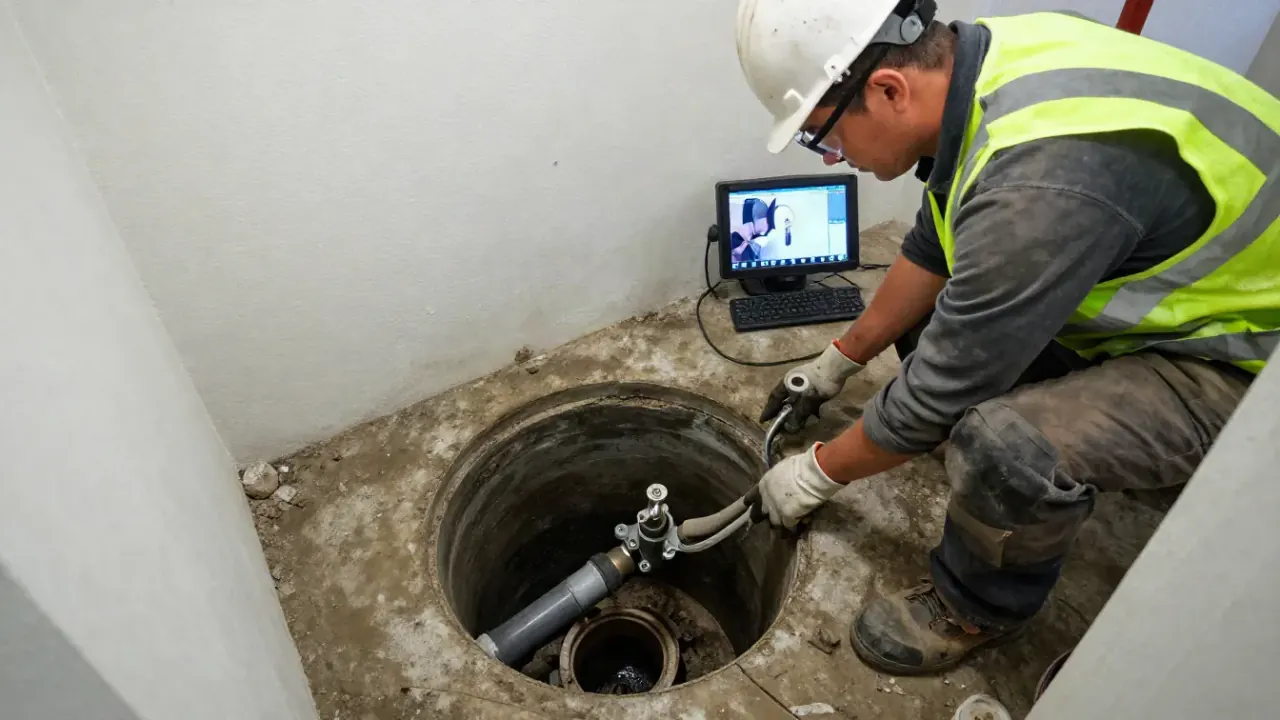
Every pipe bursting job starts here. We run a sewer camera with a pipe locator to map the lateral, measure the run, and identify root intrusion, offset pipe, or a collapsed sewer line. You get the footage and a plain-English read on what it means.
View serviceReach us at (657) 359-9054 for sewer camera inspections, spot repairs, and trenchless replacement across Stanton, California. We answer emergency backup calls 24/7 and book standard inspections Monday through Friday. Tell us your cross streets and what the drains are doing, and we will get a tech out with the camera.